Grand Rapids, MI · Garage Door Service
Torsion springs and openers on Grand Rapids's 1954-2002 housing stock fail differently than newer builds. Here's what actually breaks and why, before you call.
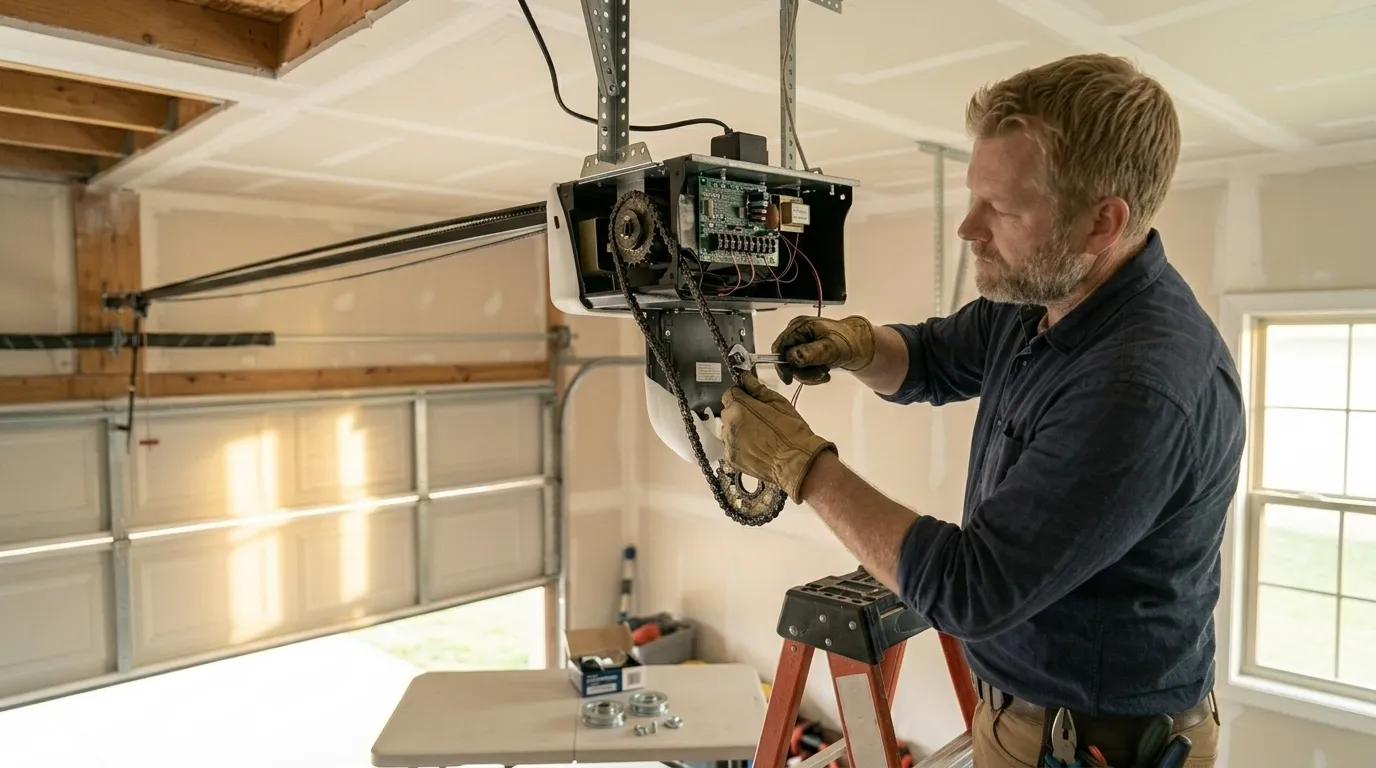
We're not going to throw a number at you here that doesn't mean anything until we've seen the door. What a repair costs depends on what's actually broken - a snapped torsion spring on a double door is a different job than a bent track or a burned-out opener circuit board, and the age of your hardware changes things too. A lot of Grand Rapids houses, especially in the pockets built in the 1980s and 90s, still run original torsion springs and openers that were standard for that era. Parts for that vintage aren't always sitting on a shelf, and sourcing them can add to the job. What we can tell you up front: we look at the door, tell you what's wrong and what it takes to fix it, and you decide before any work starts. If a repair is going to cost close to what a new door costs, we'll say so - sometimes replacement is the better call, and we're not going to talk you into throwing money at a door that's done.
Grand Rapids housing runs mostly 1954 to 2002, with a median build year of 1983, and that matters more than people think. Doors and openers installed in that window are old enough that springs have cycled tens of thousands of times and are due, or overdue, for failure - torsion springs have a service life measured in cycles, not years, and a 30-plus-year-old spring on a daily-use door is living on borrowed time. The area's cold, severe winters add a second layer: steel contracts in deep cold, hardware stiffens, and a spring that's already fatigued is more likely to snap on a January morning than a July afternoon. We see this pattern across the 26 named areas in the service footprint, from older east-side streets to newer construction closer to the edges - the fault shows up earlier in homes with the original 1980s-90s hardware still in place. Track misalignment follows a similar pattern: decades of freeze-thaw cycling on a slab can shift a garage floor just enough to throw a track out of square.
Most spring and opener repairs are a same-visit fix once the tech is on site and has the right parts on the truck. What slows things down is when a door needs a part that isn't common stock - which happens more often than you'd expect on hardware from the 1954-2002 build range, where sizes and mounting styles vary more than on newer standardized doors. If that's the case, we'll tell you at the door, not after we've already started. A straightforward torsion spring swap or roller replacement usually doesn't eat your whole day. A full opener replacement or a track realignment on an older frame takes longer, mostly because older framing doesn't always sit as square as it should after 40-plus years of Michigan winters working on the structure around it.
If the door won't budge, moves unevenly, or you heard a loud bang before it quit, that's almost always a spring - and on a house from this area's typical build era, that spring has likely never been replaced. A door that opens fine in summer but binds or groans once the cold sets in is telling you the hardware is reacting to the severe winter swings this region gets every year; grease that's fine at 60 degrees gets stiff at 10. A door that drifts off track or drags on one side points to rollers or a bent track, more common in homes where the slab has shifted slightly over the decades. Don't force a stuck door with the opener - if it's binding on a spring or track, running the motor against it can strip gears or bend the opener arm, turning a spring job into two jobs.
Cold makes steel stiffer and less forgiving, and Grand Rapids gets real winter. A torsion spring that's already near the end of its cycle life is far more likely to snap during a cold stretch than in warmer months. If your house dates to the common local build era, the spring may be original and simply due.
Depends on what's failed. A dead circuit board or a motor on its way out on a decades-old opener often costs close to a new unit once you add labor, so replacement can make more sense. A logic board issue or a simple sensor problem is usually worth fixing. We'll tell you which situation you're in before doing anything.
We can't quote a response window here without a fact to back it up, so ask when you call and we'll give you a straight answer based on the day's schedule.
Call now or request a free quote - same-day service on most repairs, upfront written pricing.