Grand Rapids, MI · Garage Door Service
Homes across Grand Rapids' 1954-2002 housing stock face cold-climate wear on garage doors. Here's when a repair still makes sense and when it doesn't.
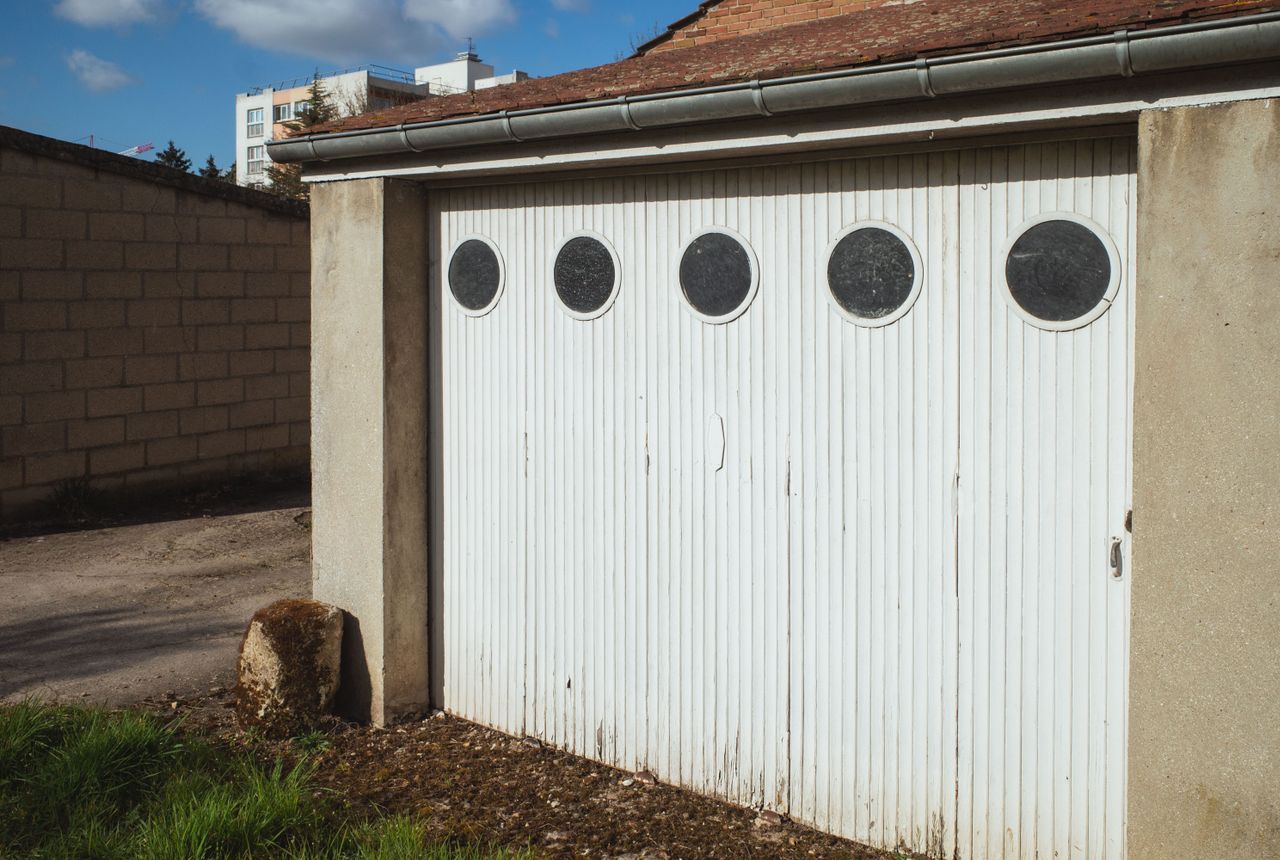
Grand Rapids housing runs mostly 1954 to 2002, with the median build year sitting around 1983. That's not a small range - it means a torsion spring job in Creston or Riverside Gardens can involve a completely different door and header setup than one in a newer pocket like Forest Hills or Byron Center. Most of the stock across the area's 26 named neighborhoods, from Garfield Park to Alpine Center to Clyde Park, dates to that 1980s-90s building wave, so a lot of doors out there are original or on their second opener at most. Add a cold, severe climate band and you get steel sections that have gone through 30-plus winters of expansion and contraction, hardware that was torque-spec'd for a door half its current weight in accumulated paint and grime, and openers that predate today's safety-reversal standards entirely. None of that is a defect - it's just what four decades of Michigan winters do to a mechanical system nobody's touched since it was installed. The door doesn't fail because it's poorly made. It fails because it's old, on a track built for a house from a different era, and it's never been asked before now.
The trouble with an '80s-era Grand Rapids door isn't usually the panels - steel holds up fine if it's not physically dented. It's the torsion spring wound to a weight spec nobody wrote down, the galvanized cable that's been flexing at the same drum groove since Reagan was president, and the original rollers running in a track that's shifted a few degrees off plumb from decades of freeze-thaw settling under the slab. Cold-climate cycling is hard on lubrication specifically: grease that worked fine at 70 degrees turns stiff at 10, which means the opener motor works harder every winter morning, straining a gear set that was never built for that extra draw. On top of that, doors from the median 1983 build year often carry openers from a second or third replacement cycle - sometimes newer, sometimes not - so the mechanical age of the door and the electrical age of the opener don't match, and that mismatch is where a lot of the surprise failures come from. It's rarely one big thing. It's three small worn things finally meeting a cold morning at the same time.
Swapping a remote battery or clearing a sensor lens - fine, do it yourself. A torsion spring on a door built to a 1980s or 90s spec is not a fine one. These springs are wound to hold serious tension, and if the winding cone lets go while you're on the ladder, it can break bones. That's true on any door, but it's more likely on a house in this age range because the spring has never been replaced and nobody knows its actual wind count anymore. Track alignment is the other one people underestimate: if the opening has settled - common in the older housing stock across this area - squaring the track back to the framing isn't a bolt-tightening job, it's a measure-shim-and-recheck job. Here's the honest limit: if your door is from the original 1983-ish build and the springs have never been swapped, and it's also making a grinding sound at the drums, that's not a $40 parts fix. That's a full hardware replacement, and pretending otherwise just moves the failure to a worse moment - like a January morning instead of a Tuesday afternoon.
Cold, severe winters are the defining fact for garage doors here, and the seasonal pattern follows from that. Late fall is when grease starts stiffening and openers start straining - worth listening for a labored motor sound before the real cold sets in. Deep winter is when steel contracts enough that a slightly misaligned track finally binds, and when weatherstripping that's gone brittle over multiple freeze cycles finally cracks and lets drafts in. Spring thaw brings the opposite problem: ground movement from frost heave can shift a slab edge just enough to throw off a track that was fine in October. Summer is the forgiving season mechanically, but it's the best time to actually deal with the spring or opener you've been ignoring, since there's no rush and no risk of doing the job in freezing hands. None of this is about weather events - it's about what a repeated hot-cold cycle does to steel, grease, and rubber over the 20 to 40 years most doors in this area have already logged. The season doesn't cause the failure. It just picks the day.
Depends what's failing. A spring, cable, or roller swap on an otherwise sound steel door is usually worth doing even on an original 1983-era door - the panels rarely wear out. If the opener, track, and springs are all original and all showing age at once, replacement often costs less over time than three separate repair calls.
Grease thickens in the cold, and steel track contracts slightly, which can bind rollers that were riding fine in summer. On an older door with original hardware, that extra resistance strains a motor and gear set that's already been working for decades, which is often when something finally gives.
Not recommended, and not something we'd walk you through on the phone. A wound torsion spring holds enough stored tension to cause serious injury if the cone slips, and on an older door you usually don't know the original wind count. It's a call worth making.
Call now or request a free quote - same-day service on most repairs, upfront written pricing.