Grand Rapids, MI · Garage Door Service
A look at what a garage door service call actually checks on Grand Rapids houses built between 1954 and 2002, and why cold-climate wear changes the job.
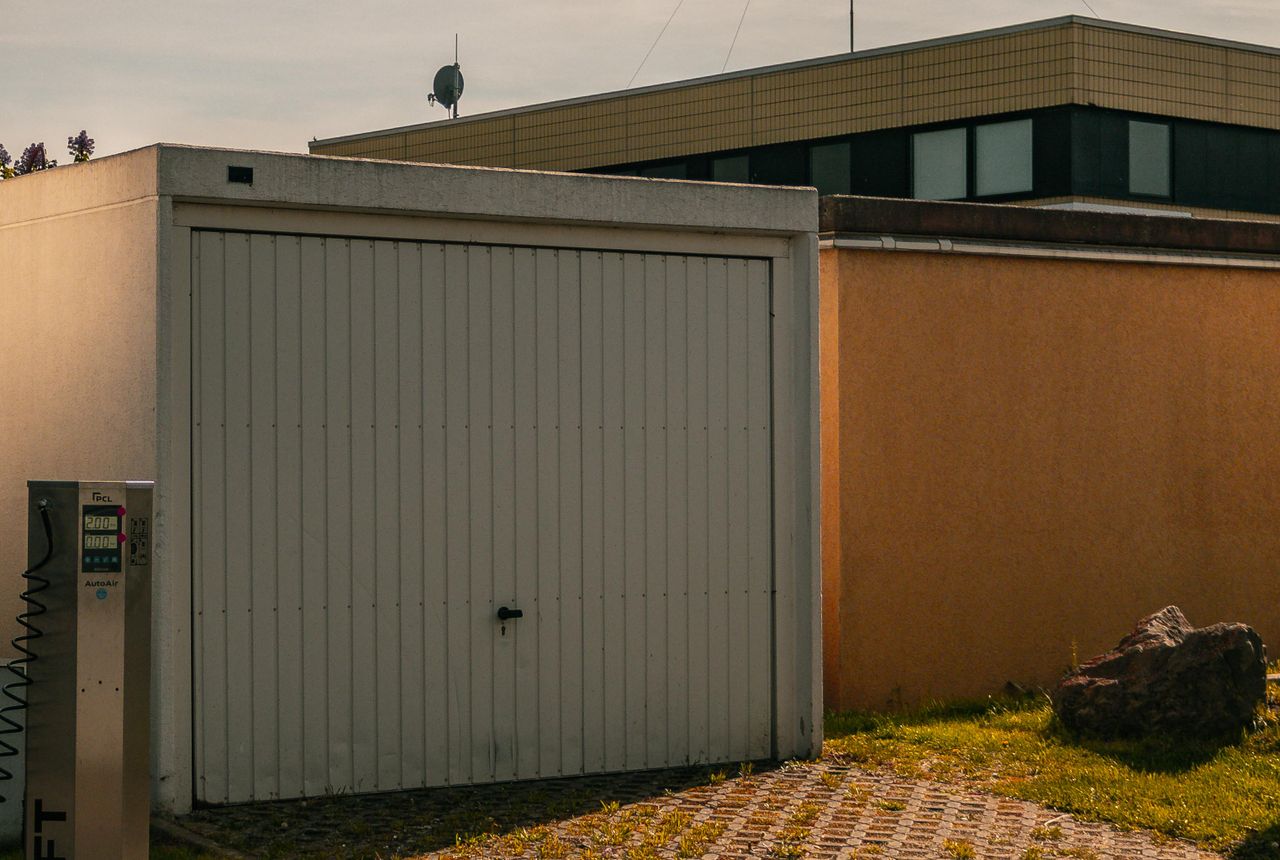
Most of the houses we work on in Grand Rapids and the surrounding areas - Creston, Garfield Park, Eastown-adjacent Reeds Lake, out to Kentwood and Wyoming - were built between 1954 and 2002, with the median landing around 1983. That means a huge share of the doors we open up are original or one-replacement-in hardware from the 1980s and 90s: torsion springs sized for lighter steel doors, galvanized cable that's outlived its coating, and openers with chain drives that were standard for that era. A service call on a house like this isn't a generic tune-up. It's checking parts that were engineered for a Michigan winter thirty or forty years ago, sized against loads that may not match what's on the track today if a door's been swapped but the spring wasn't recalculated.
We also see a real split in how homes were finished. Some of the 1980s tract construction across areas like Alpine Center and Westside Connection kept a single-car opening; other blocks built closer to 2000 went with wider double doors on heavier steel. Both react to cold the same way, but the spring cycle counts and cable stress are different, so the checklist changes with the build year, not just the symptom.
Grand Rapids sits in a severe cold climate band, and that's the single biggest thing shaping what fails first here. Steel contracts in the cold, grease thickens, and the rollers on a 1980s or 90s door - often nylon, sometimes still the original steel wheels - bind up right when the opener is straining hardest to lift a door that's picked up ice weight along the bottom seal. A spring that's fine in July can snap in January because cold makes the steel more brittle right as the door gets heavier.
The other problem is age catching up with a house that's been otherwise well maintained. A torsion spring rated for 10,000 cycles installed when a house was built in the early 1980s has had four decades to use those cycles up, and homeowners don't track that number. When we get a call about a door that's suddenly loud or slow, more often than not it's a spring at the end of its life meeting a cold snap, not a sudden defect.
Anything involving the torsion spring itself is not a homeowner repair - the spring is under enough tension to cause serious injury, and that doesn't change no matter how old or new the house is. Adjusting cable tension or replacing a broken cable falls in the same category. If your door is sagging on one side or came off the track, stop opening it by opener until it's looked at; running the motor against a jammed track usually turns a $150 fix into a full opener replacement.
Where we draw an honest line: if a door is original to a house built in the 1950s or 60s and the track, hinges, and panel are all worn together, patch repairs often aren't worth it. Replacing the whole door and matching hardware to the opener you actually have costs less over five years than repeated service calls on parts that were never meant to last this long. We'll tell you when that's the case instead of running up small repairs.
Fall is when we get the most calls from houses in the older stock - anything from the 1954-1983 range - because that's when people notice a door that's been struggling all summer. Cold hits and the slack in worn cable or a stretched spring finally shows up as a door that won't seal, won't lift evenly, or grinds on the track.
Winter is spring-failure season across the whole service area, newer builds included, because the cold makes tension-bearing steel more brittle right when the opener is working hardest against a door that may have ice or snow load. We see fewer catastrophic failures in homes with 1990s-or-later doors simply because the hardware is younger, but the same physics apply.
Spring and summer are when we do most opener and roller work - the failures that built up over winter finally get fixed once the cold stops making every job an emergency call. If your house falls anywhere in that 1954-2002 build window, a fall inspection before the first hard freeze catches most of what would otherwise turn into a January no-heat, no-door call.
If your house was built in the 1980s or 90s and you've never had a spring replaced, it's very likely original or close to it. Given the severe cold winters here, a spring that old is past the point where we'd recommend waiting - cold makes fatigued steel more likely to snap without warning.
No. Plenty of calls end with an inspection and a recommendation to keep an eye on something, especially rollers or weatherstripping that are worn but not failed. We'd rather tell you a part has a season or two left than replace it early.
Cold steel is more brittle, and grease inside bearings and hinges thickens, so anything already worn - a spring near the end of its cycle life, a stiff roller - tends to fail in winter rather than summer. It's the same hardware, just under more stress.
Sometimes, but not always. If the track and panel are original along with the spring, we're usually replacing enough parts that a new door and matching opener hardware costs less over time than piecemeal repairs on 60-plus-year-old steel.
Call now or request a free quote - same-day service on most repairs, upfront written pricing.