Grand Rapids, MI · Garage Door Service
Garage door installation built for Grand Rapids's 1954-2002 housing stock and cold winters. Straight talk on what drives cost, timeline, and common failure points here.
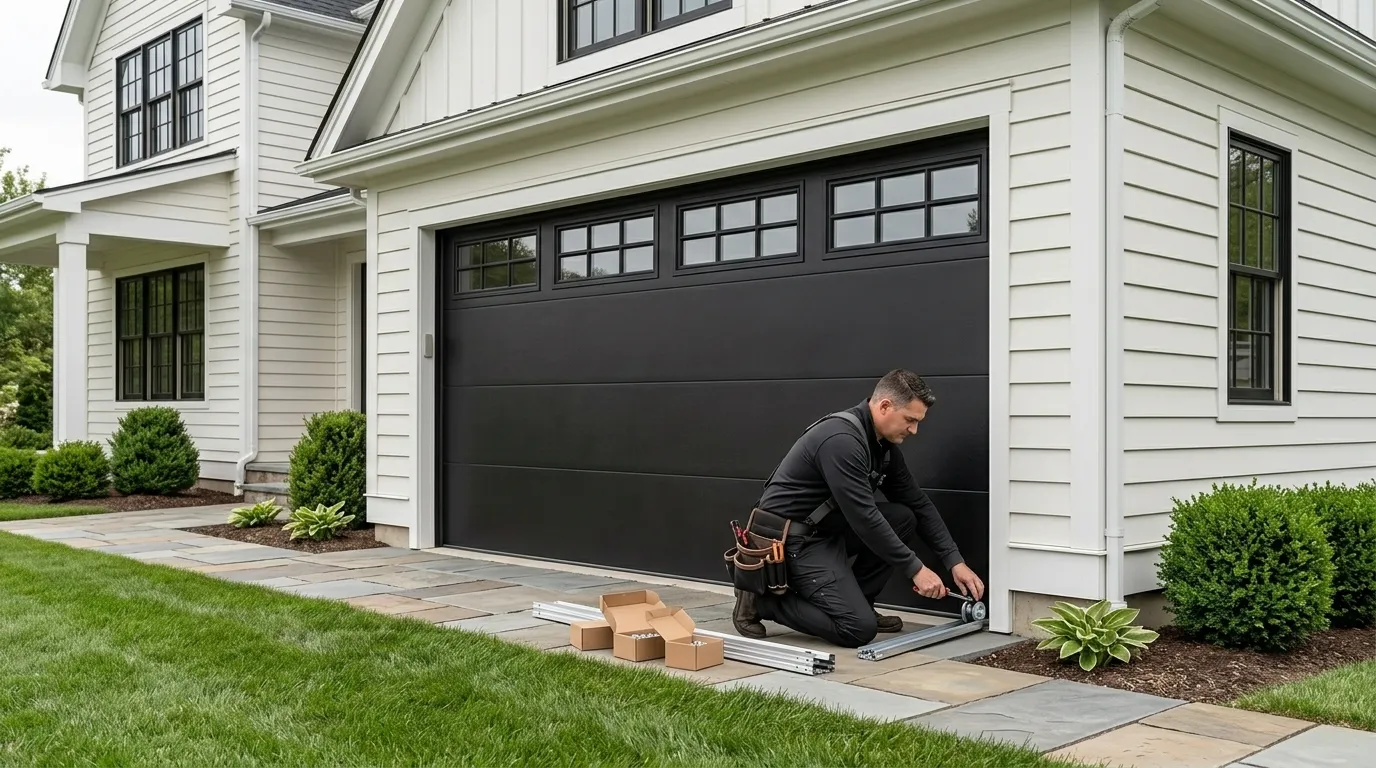
We're not going to throw a number at you that doesn't mean anything until someone's looked at your opening. What we can tell you is what actually moves the cost on a Grand Rapids install. Insulation is the big one. Given the cold-climate rating here, a single-layer steel door without a thermal break is going to cost you more in heating bills than it saves you up front, so most homeowners end up weighing an insulated panel against a cheaper uninsulated one and choosing insulation anyway. Header height and track clearance matter too - a lot of the garages built in this area between 1954 and 2002 were framed for a specific door width and headroom, and if you're upsizing or switching from extension springs to torsion, that changes labor. Opener compatibility is another factor: if your existing opener is old, we may need to swap it to match the new door's weight and travel. We price every job after a walk-through of your specific opening, not off a phone estimate, because the housing stock here is varied enough that a flat number would be wrong more often than it's right.
Grand Rapids housing runs from 1954 up through 2002, with the median build landing around 1983, and across the roughly 26 named pockets of the metro that mix is pretty consistent. That means a big share of doors in this area are original or close to it - steel or wood panels built for a milder expectation than what a severe cold climate actually delivers over 20 or 30 winters. Freeze-thaw cycling is hard on garage door hardware specifically: tracks pull slightly out of alignment as the slab heaves, torsion springs lose tension faster in cold steel, and rubber bottom seals crack and let cold air straight into the garage. If your house sits in Creston, three miles north of downtown, or out toward Belknap Lookout a mile northwest, you're likely dealing with hardware installed under different code and material standards than what's available now. None of that means the door is unsafe to use today - it means the failure, when it comes, tends to be sudden rather than gradual, because the parts have been quietly losing margin for years.
Installation day length depends mostly on what's coming out, not what's going in. A straight swap - same size opening, same track configuration, opener staying in place - moves faster than a job where we're changing spring type or widening the header for a new door size. Older openings, especially the ones dating back toward that 1954-1983 range, sometimes need extra bracing or track adjustment before the new door will hang square, and that adds time on site. We won't promise a same-day turnaround before we've seen the opening, because on some of the older houses in this area what looks like a simple door replacement turns into a hardware rebuild once the old track comes off the wall. What we will do is tell you honestly, after the walk-through, whether your job is a half-day job or a longer one, and why.
The install call usually starts with one of a few things: a panel that's visibly bowed or dented at the bottom, a door that's noticeably heavier to lift by hand than it used to be, or daylight showing under the bottom seal even when the door's fully closed. That gap matters more here than in a mild climate - with a severe cold rating, a quarter-inch gap under the door is a real path for cold air into an attached garage, and it usually means the seal or the slab has shifted enough that a repair won't hold for long. Some homeowners also notice their opener straining or reversing partway through the cycle, which is often the door itself getting heavier from moisture absorption in an older wood panel or from spring fatigue, not the opener failing. If you're only seeing cosmetic wear and the door still opens smooth and quiet, that's a repair conversation, not a replacement one - we'd rather tell you that up front than sell a door you don't need yet.
Not always. If your current opener is in good shape and rated for the weight of the new door, it can usually stay. Where we run into trouble is older openers paired with a heavier insulated door - the opener has to work harder, and that shortens its life. We'll check the match during the walk-through before recommending a swap.
Cold steel springs lose tension faster than they do in warmer months, and in a climate rated severe cold that effect is more pronounced here than in milder regions. If the door feels noticeably heavier once temperatures drop, the spring is likely undersized or nearing the end of its life, not just "stiff from the cold."
It depends on when your house was built. A lot of Grand Rapids homes date to the 1954-2002 range, and openings from different decades in that window weren't built to one universal standard. We measure your specific opening rather than assuming a size, since a mismatch there is the most common reason an install takes longer than expected.
Call now or request a free quote - same-day service on most repairs, upfront written pricing.