Grand Rapids, MI · Garage Door Service
Garage door repair and spring replacement for Walker Center homes, built mostly from the 1950s through the 1990s, six miles WNW of downtown Grand Rapids.
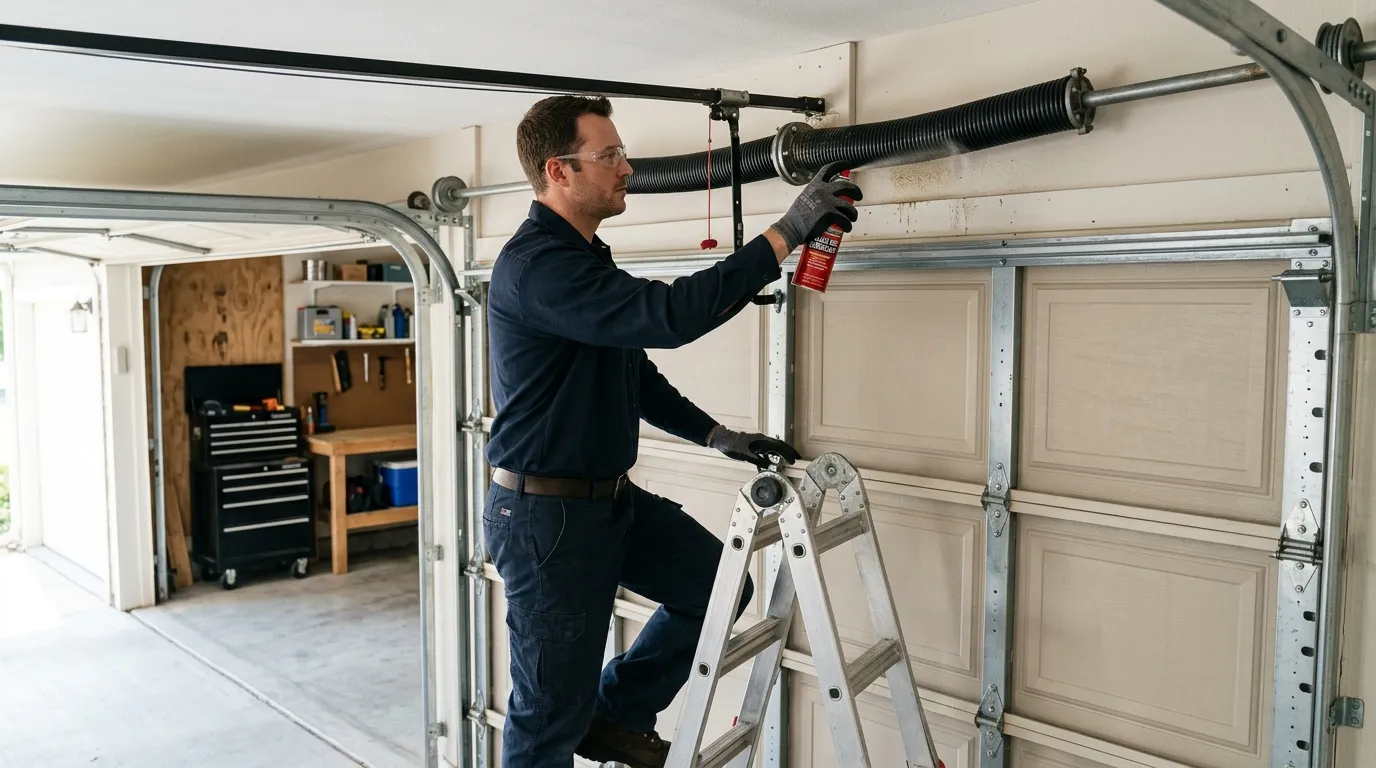
Across the wider Grand Rapids service area, houses went up mostly between 1954 and 2002, with the median build year landing around 1983. Walker Center sits inside that stretch, six miles WNW of downtown, in the band of the metro where the bulk of the stock dates to the 1980s and 90s rather than the older core neighborhoods closer to the center of the city. That matters for a garage door because a house built in that window almost always came with a single-car or two-car attached garage designed around the standard torsion or extension hardware of the period, not the newer low-headroom or wall-mount setups you see on houses built in the last decade or two. The winters here fall into the severe end of the cold climate band, which means the doors on these garages have spent three or four decades cycling through freeze-thaw swings every year. That's a lot of wear on rollers, hinges, and the bottom seal, even on a door that's never had an obvious problem. A door from this era isn't old enough to be a curiosity, but it's old enough that the springs and cables are due, or overdue, for attention.
Most doors on houses from this build window are steel sectional panels on a torsion spring system mounted above the opening, sometimes paired with an extension-spring setup on the cheaper end of the original construction. Openers from that era are often chain-drive, and a fair number have never been swapped, which means the motor, the logic board, and the safety reversal sensors are all original equipment well past their expected service life. In severe cold, steel panels contract, weatherstripping hardens and cracks, and torsion springs lose tension faster than they would in a milder climate, so a door that worked fine in September can bind or refuse to open by January. We don't stock every obsolete spring size or opener control board on the truck, so if a door still has its original 1980s hardware, there's sometimes a short wait to source the right part rather than a same-day swap. That's the honest tradeoff of working on hardware this age: most jobs are fast, some take an extra day because the part isn't a common one anymore.
If your door is sticking, dropping unevenly, or making a grinding sound when it moves, that's usually the spring or the rollers, not the opener, and it's worth getting looked at before the cable snaps under load. Book through the site and give a clear description of what the door is doing, including whether it's the panel, the track, or the opener acting up, since that tells us what to bring on the truck. We work across the Grand Rapids service area, which covers households at every income level, including the roughly 75,000 owner-occupied houses in the metro, so Walker Center is a normal stop on a normal route, not a special trip. If your door is original to a house built in the early 1980s, mention the approximate age when you call. It saves a return visit if the part turns out to be a size we need to order.
Walker Center is about six miles WNW of downtown Grand Rapids, closer in than places like Coopersville or Sparta but further out than the near-core neighborhoods like Belknap Lookout or Creston Heights. Comstock Park and the city of Walker itself both sit roughly the same distance out, and Alpine Center is a few miles further NNW, so this stretch of the metro is generally suburban rather than downtown-adjacent, with the housing stock to match. The broader service area runs to roughly 151,000 households with a median income near $76,463, and Walker Center's housing, mostly from the 1980s and 90s building boom, fits comfortably into that picture rather than standing out from it. It's not a neighborhood with a distinct architectural identity so much as a good example of what got built across this side of Grand Rapids during that stretch of decades.
Given that housing in this part of Grand Rapids mostly dates from the 1980s and 90s, with the wider service area running from 1954 to 2002, most original garage doors and openers here are somewhere between 25 and 40 years old. That's well past the expected life of a torsion spring, even if the door still looks and moves fine day to day.
Yes. The area sits in a severe cold climate band, and steel torsion springs lose tension faster through repeated freeze-thaw cycles than they would in a milder climate. A spring that's held up for years can go from fine to snapped in the space of one hard winter, especially if it was original equipment from the 1980s or 90s.
Not always. Openers original to houses from this build era sometimes use control boards or drive systems that aren't stocked on the truck because they're no longer common. Most repairs happen the same visit, but occasionally we need a day to source the right part for genuinely old hardware.
Call now or request a free quote - same-day service on most repairs, upfront written pricing.