Grand Rapids, MI · Garage Door Service
Serving Rockford homes built mostly in the early 1990s with torsion springs and steel doors rated for Michigan cold. We drive out from Grand Rapids, 13 miles away.
Rockford's housing stock sits later than a lot of what we see closer to Grand Rapids. The median build year out here is 1991, almost a decade newer than the 1983 median across the wider service area. That gap matters more than it sounds like it should.
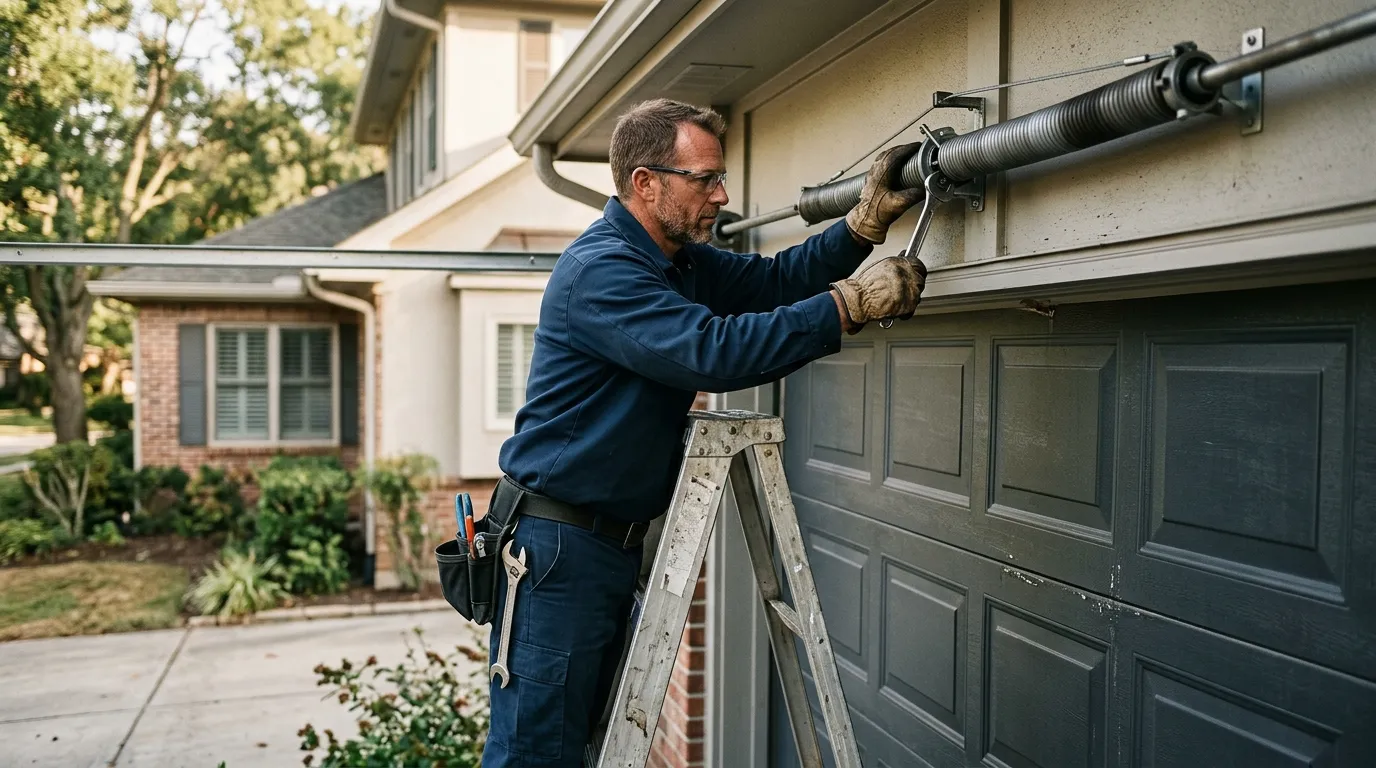
A house built in 1991 usually came with a torsion spring system already standard, not the older extension-spring setups you still find on homes from the 60s and 70s. The tracks are wider-gauge, the openers are chain or belt drive rather than the early screw-drive units, and the steel panels are typically insulated rather than solid single-layer. When something fails on a Rockford door, it's more often the opener logic board, a worn roller, or a cable that's frayed from age than a spring system that was undersized to begin with.
That doesn't mean nothing breaks. Thirty-plus years is enough time for nylon rollers to crack, for torsion springs to fatigue past their cycle count, and for weatherstripping to give up in the cold. It just means the failure pattern here skews toward wear-and-tear on decent original hardware, not a fight against parts that were outdated on installation day.
We don't keep a crew or a truck stationed in Rockford. Every job here means a drive from Grand Rapids, and we're upfront about that rather than pretending otherwise. If you need same-hour emergency service on a holiday weekend, we may not be your fastest option, and we'd rather say that now than after you've waited on us.
We also don't replace a door when a repair will hold. If your torsion spring is original to a 1991 build and one side goes, we'll generally replace both springs as a set rather than sell you a full door - the panels and track on a house that age are usually still sound. Full replacement makes sense when the steel is rusted through or the track is bent beyond adjustment, not just because a door is old.
Rockford sits about 13 miles from our shop in Grand Rapids, north of the tighter-packed neighborhoods like Creston and closer in scale to the other outlying communities we cover - Cedar Springs, Sparta, Belmont's neighbors along that corridor. It's a straightforward run, not a detour we have to plan around, and it's part of the regular territory we drive rather than a stretch assignment.
We mention the distance because it's honest, not because it's a selling point. A 13-mile drive means we're not going to be the crew that shows up in fifteen minutes for a spring that snapped at 6 a.m. What it does mean is that a scheduled repair or a replacement job gets treated the same way any Grand Rapids job would - same parts, same approach - it just starts with a drive up Michigan's cold-belt roads instead of a trip across town.
With roughly 2,667 households in the immediate area and a median household income around $100,156, Rockford runs higher on income than the broader service area's $76,463 median. That tends to show up in the doors themselves - more insulated steel and composite panels, fewer bare single-layer originals, more owners who've already had an opener upgraded once.
The region falls in a severe cold climate band, and a house built in 1991 was already meeting a stricter set of expectations for sealing and insulation than the older stock closer to the city core. That's good news for the door itself, but it puts more strain on weatherstripping and bottom seals, which are the parts most exposed to freeze-thaw cycling every winter. When a Rockford owner calls about a door that won't seal tight or drags on a cold morning, it's usually the seal or the track alignment, not the panel underneath it, that's given out.
About 13 miles from Grand Rapids. It's a regular part of our coverage area, not a special trip, but it does mean we're not the fastest option if you need someone in the driveway within the hour.
Newer on average. The median build year here is 1991, versus 1983 across the wider service area, so torsion spring setups and insulated steel panels are more common than the older extension-spring doors you find in older neighborhoods.
Depends on the door. On a house from the early 90s, we'll usually repair - springs, rollers, opener parts - rather than replace, since the panels and track are typically still sound at that age. Replacement makes more sense when steel has rusted or the track is bent.
Yes, mostly around seals rather than the door itself. This area sits in a severe cold climate band, and freeze-thaw cycling wears out weatherstripping and bottom seals faster than it damages the steel panels or torsion springs.
Call now or request a free quote - same-day service on most repairs, upfront written pricing.