Grand Rapids, MI · Garage Door Service
Local garage door service for Michigan Oaks, 2 miles ENE of downtown Grand Rapids, where most houses date to the 1980s and 90s stock of the wider area.
Michigan Oaks sits about 2 miles ENE of downtown Grand Rapids, inside a service area where housing overall runs from 1954 up through 2002, with a median build year of 1983. That puts most of what we see on calls out this way squarely in the 1980s and 90s window that defines a lot of Grand Rapids' outer neighborhoods. Houses from that era were almost never built with anything fancy on the garage - a single steel sectional door, a chain-drive opener bolted to the ceiling joists, and torsion or extension springs sized for the builder-grade door that shipped with the house. Thirty-plus years on, a lot of that original hardware is still in place, just tired. Springs from that period are past their rated cycle count even if nobody's touched them. Openers from the 90s often still work, technically, but parts for the logic boards stopped being made a long time ago. None of this is unique to one street in Michigan Oaks - it's the story of the whole build era across this side of the city, and it's why the work we do here leans toward replacement of worn mechanical parts rather than exotic repairs.
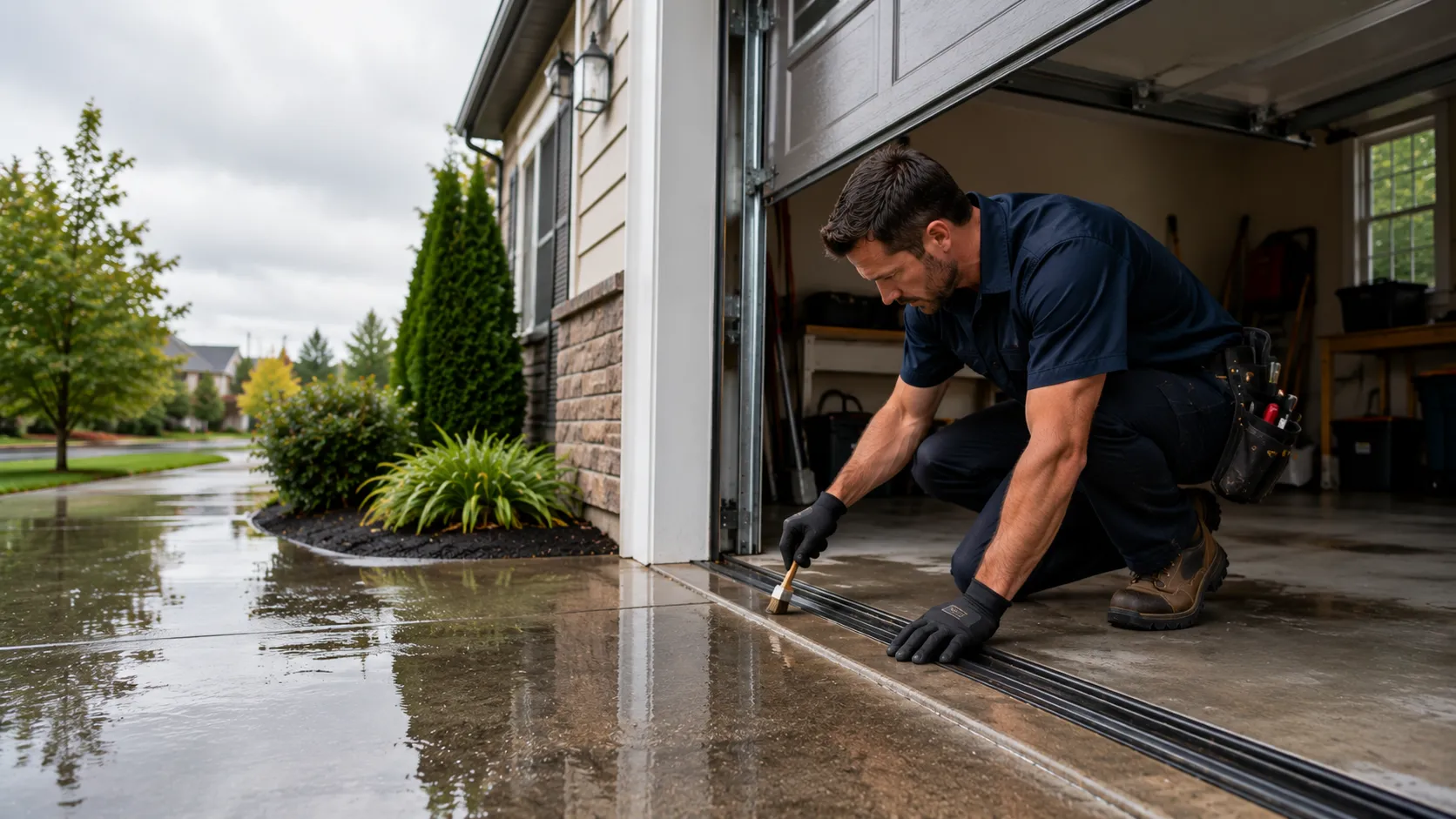
Given the build window, expect a plain raised-panel steel door, most likely two-car, on a torsion spring set mounted on a header bracket above the opening rather than anything more modern like side-mount jackshaft hardware. Rollers are usually the original galvanized steel type, not nylon, which means more noise and more wear on the track over the decades. Openers from this era are chain-drive, 1/3 or 1/2 horsepower, and by now many are on their second or third remote. Weatherstripping at the bottom panel is often the first thing to fail in a Michigan winter - it hardens and cracks, letting cold air and meltwater under the door. Given the region's cold, severe winter climate, that seal matters more here than it would somewhere milder: a bad bottom seal means ice buildup on the slab and a door that drags or sticks shut on the coldest mornings. We don't guess at what's on your door before we see it, but the odds are strong it matches this general profile.
One honest limitation: we don't stock every roller or seal profile for every builder-grade door from every year in this window, so if your hardware is an odd size we may need to order a part rather than finish everything on the first visit. That's rare, but it happens with older stock. Beyond that, a visit to a Michigan Oaks address is straightforward - we're used to the springs, drives, and panel styles that came standard on houses built in this stretch of Grand Rapids' growth. Call ahead with the door's approximate age if you know it, or just tell us it's original to the house; that alone tells us most of what we need before the truck even arrives.
Michigan Oaks is a small pocket about 2 miles ENE of downtown Grand Rapids. It's close enough to the center that a service call doesn't sit at the bottom of a long list, and far enough out that the housing reflects the area's broader mid-to-late 20th century growth rather than the older stock closer in. For reference on the wider service area, visit our home page for the full list of neighborhoods and towns we cover, from Rockford and Sparta well to the north down to Dorr and Wayland to the south.
We don't have a Michigan Oaks-specific build year, but the surrounding service area's housing runs 1954 to 2002 with a median of 1983, and most neighborhoods on this side of Grand Rapids match that 1980s-90s window. So the door and opener on a typical house here are likely original or close to it.
Yes. A lot of houses built in the 1980s and 90s still have their original chain-drive opener, and by now the circuit boards are often obsolete even if the motor still runs. We can swap it for a current unit that fits the same header bracket without reworking the whole opening.
This area sits in a cold, severe winter climate zone, and a hardened or cracked bottom seal is the most common cause of a door sticking or dragging on cold mornings. Once that seal fails, meltwater refreezes right at the threshold. It's usually a quick fix, not a sign the whole door needs replacing.
Often, yes - galvanized steel rollers and standard track from the 1980s-90s builder-grade doors common in this area are still widely available. Occasionally an odd size means we order a part rather than finish in one visit, but that's the exception, not the rule.
Call now or request a free quote - same-day service on most repairs, upfront written pricing.