Grand Rapids, MI · Garage Door Service
Gezon Park sits 8 miles SSW of downtown Grand Rapids, in housing built mostly from the 1970s through the 1990s. We work on the doors, springs, and openers that era put in.
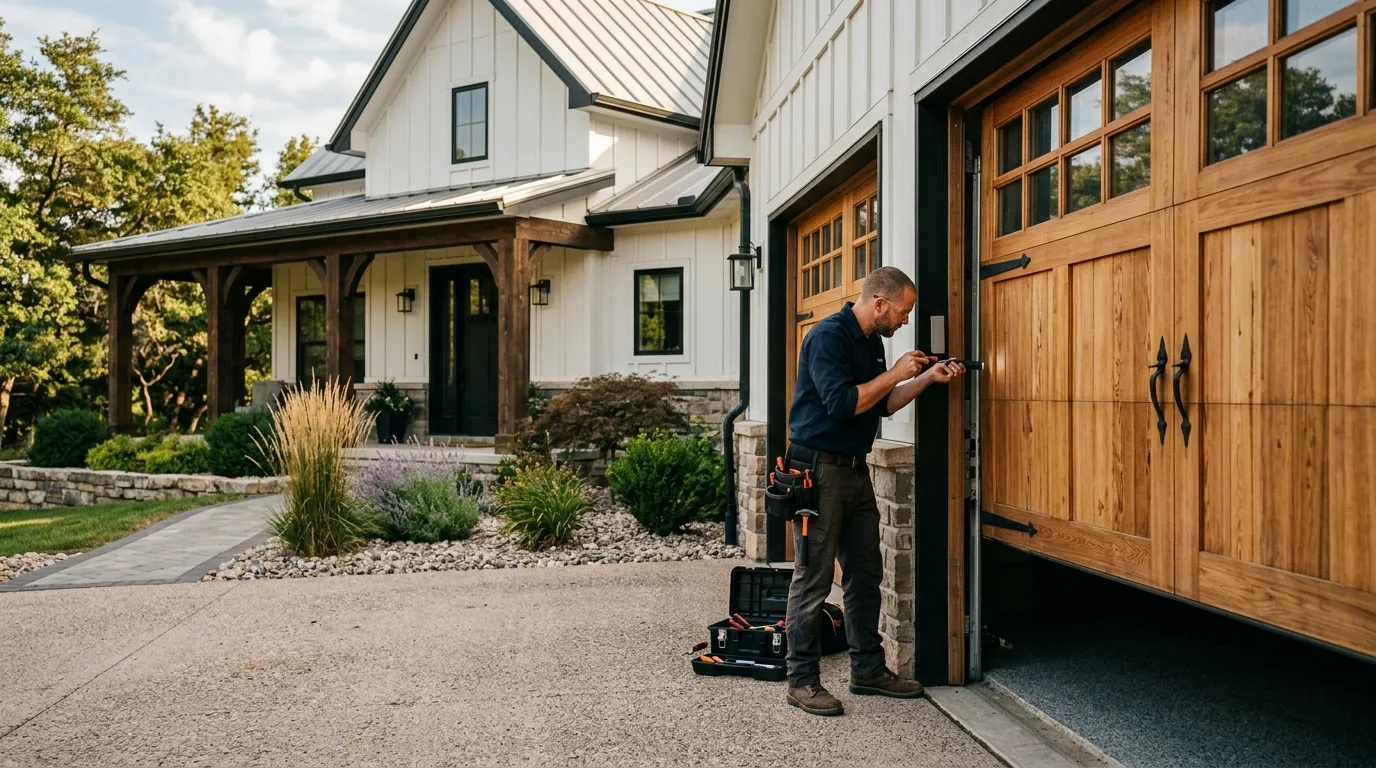
Gezon Park sits about 8 miles southwest of downtown, on the far edge of the service area we cover. Housing across this whole area runs from 1954 to 2002, with a median build year of 1983, and neighborhoods this far out tend to skew toward the later end of that range rather than the earlier one. That matters for garage doors because it tells us what's behind the panel before we even get out of the truck. A house built in the late 1970s or 1980s almost always got a steel sectional door on an extension spring or early torsion setup, sized for a single-car or narrow two-car bay. Openers from that build window, if original, are chain-drive units with half-horsepower motors that have usually been swapped once or twice already by the time we see them. We don't have a street-by-street count for Gezon Park itself, so we're describing the pattern across this side of Grand Rapids rather than a specific block. If your house was built well outside that 1954-2002 window, some of what follows won't apply, and we'd rather say that than guess.
Doors from the 1970s-90s building wave carry hardware that's aged out of easy stocking. Extension springs on older single-car bays wear unevenly and tend to snap without much warning, which is different from the more predictable fatigue cycle of torsion springs. Steel panels from that era are also thinner than what's sold today, so a dent from a bumper tap can bow a whole section rather than staying local to one spot. Openers are the other recurring issue: a chain-drive unit installed new in 1988 has had forty years to wear its gears down, and by now most of them are on a second or third motor, not the original. We work on all of it, but we won't sell you a full replacement door when a spring swap and a new roller set solves the actual problem. Grand Rapids' winters are a genuine factor here, not a sales line. This area sits in a cold-climate band with real freeze-thaw cycles, and steel contracts enough in a hard cold snap that a track already slightly out of alignment will bind or jump right when you need the door most. That's usually a hardware fix, not a full unit.
We schedule from our home base and route out to this side of Grand Rapids as calls come in from the southwest side of the service area. Because Gezon Park is toward the outer edge of where we work, it helps to know roughly what's wrong before you call - is it the spring, the opener, or a door that won't sit flush on the track - so we can bring the right stock the first trip instead of a second one. We don't carry every obsolete extension-spring size on the truck; some of the older hardware from this build era has to be ordered, and we'll tell you that up front rather than stringing out a visit.
Gezon Park is roughly 8 miles southwest-southwest of the center of Grand Rapids, well out from the closer-in neighborhoods like Garfield Park or Clyde Park and past the inner ring entirely. The broader service area runs to 151,171 households, with 75,312 of those owner-occupied houses, and a median household income of $76,463 - figures that describe the region as a whole rather than this pocket specifically, since we don't have Gezon Park's numbers broken out on their own. What we can say with confidence is the housing-era pattern that applies across the southwest side, and that's what shapes the kind of repair calls we get from out this way.
Not house by house. We have build-year data for the wider Grand Rapids service area - 1954 to 2002, median 1983 - and Gezon Park falls within that range. If you want an exact year for your own house, your county assessor's record will have it; we go by what we find on the door and opener once we're there.
Extension springs, common on older single and narrow double doors, don't wear evenly the way torsion springs do. They stretch and fatigue along their coils, and when they go, it's usually sudden rather than a slow give. If your door dates to the 1970s-90s build wave common in this area, that's the type you're most likely working with.
Depends on the failure. A worn gear or a bad capacitor is a cheap fix on a chain-drive unit. But if the motor itself is going after decades of use, sinking money into it usually costs more over time than a new opener does. We'll tell you which one you're looking at before we touch anything.
Yes. This area sits in a cold climate band with hard freeze-thaw cycles, and steel components contract in deep cold. A track that's a little out of alignment in October can bind or jump in January. Most of what we see in the coldest weeks is hardware that was already slightly off, not new damage.
Call now or request a free quote - same-day service on most repairs, upfront written pricing.