Grand Rapids, MI · Garage Door Service
Garage door repair for Garfield Park, three miles south of downtown Grand Rapids, where most houses date to the 1954-2002 build era and winters run cold and long.
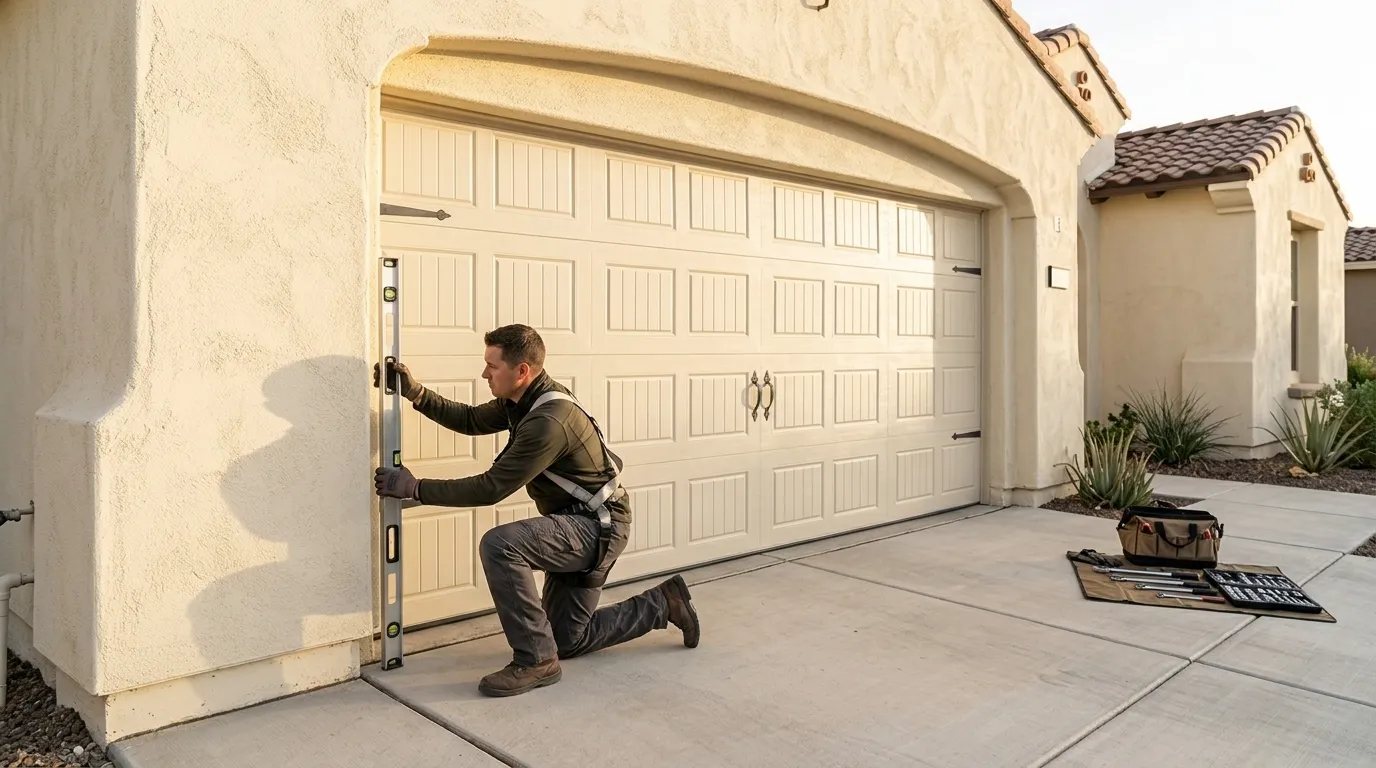
Garfield Park sits inside a service area where housing mostly went up between 1954 and 2002, with the median build year landing around 1983. That's a long stretch, but it points to a specific kind of garage: single-car or two-car attached bays built into a ranch or split-level footprint, not the three-car garages you see on newer construction farther out. A door installed anywhere near that median year is now pushing forty years old, which for a garage door means the second or third opener, and likely a spring that's already been swapped once.
We don't have street-by-street records for this neighborhood specifically, so we won't pretend to know which block has which door. What we can say is that the era this area was built in used hardware and door widths that are still common enough to service, but old enough that a straight replacement part isn't always sitting on a shelf. If your door was original to the house, it's worth asking about the track and spring type before assuming a quick fix.
Doors from the 1954-2002 window typically run one of two spring setups: older extension springs mounted along the horizontal track, or torsion springs added later during a hardware upgrade. Panel doors from the earlier end of that range are often steel, sometimes with minimal insulation, which matters here because the climate band for this area is classified cold and severe. An uninsulated or thinly insulated panel door on an attached garage does the homeowner no favors once temperatures drop and stay down.
We won't tell you every garage in Garfield Park has the same setup - we don't have that data, and it wouldn't be true anyway given the range of build years. What we will say is that a cold-climate winter is hard on rollers, weatherstripping, and any spring that's been cycling for decades without a tension check. If a door is sticking or dropping unevenly, spring fatigue is a common cause in houses from this era, and it's not something to keep forcing with the opener.
We schedule visits to Garfield Park the same way we do across the rest of the service area - you tell us what the door is doing (won't open, opens crooked, makes a bang on the way down), and we bring parts sized for the era of door that's common in a neighborhood like this one. Because a lot of the housing stock here dates to the 1980s median build year, we try to have torsion and extension spring options on the truck rather than assuming one or the other.
One honest limit: if a part turns out to be a size or profile that isn't stocked - which happens more with older, discontinued panel styles - there can be a short wait to order it in. We'll tell you that up front rather than promise a same-visit fix we can't back up.
Garfield Park is about three miles south of downtown Grand Rapids. It sits near other close-in neighborhoods on the service map, including Ridgemoor about four miles southeast and Clyde Park roughly four miles south-southwest, with Reeds Lake and Shawnee Park a bit further east and southeast. Farther out, the service area stretches to communities like Kentwood and Grandville, both about six miles from the center, but Garfield Park itself is one of the closer-in neighborhoods rather than an outlying one.
Across the broader service area there are 151,171 households and 75,312 owner-occupied houses, with a median household income of $76,463. Those numbers describe the region Garfield Park sits inside, not the neighborhood in isolation, but they give a rough sense of the housing density and ownership pattern this side of the city shares with its neighbors.
We don't have door-specific records for this neighborhood, but the surrounding service area's houses were mostly built between 1954 and 2002, with a median around 1983. A door that age has usually been through at least one opener replacement and often a spring swap.
Yes. This area falls into a cold, severe climate band, and that's hard on rollers, weatherstripping, and spring tension over a Michigan winter. Older, thinly insulated panel doors common in mid-century construction feel it more than newer insulated models.
We stock common torsion and extension spring sizes given how much of the local housing dates to the 1980s median build year. Some older or discontinued panel styles aren't always available same-visit, and we'll say so upfront if a part needs to be ordered.
About three miles south of downtown. It's one of the closer-in neighborhoods on our service map, near Ridgemoor and Clyde Park, both a few miles to the southeast and southwest.
Call now or request a free quote - same-day service on most repairs, upfront written pricing.