Grand Rapids, MI · Garage Door Service
East Kentwood garage doors mostly date to the 1980s-90s building wave. We work on the torsion springs, openers, and steel panels that era put in.
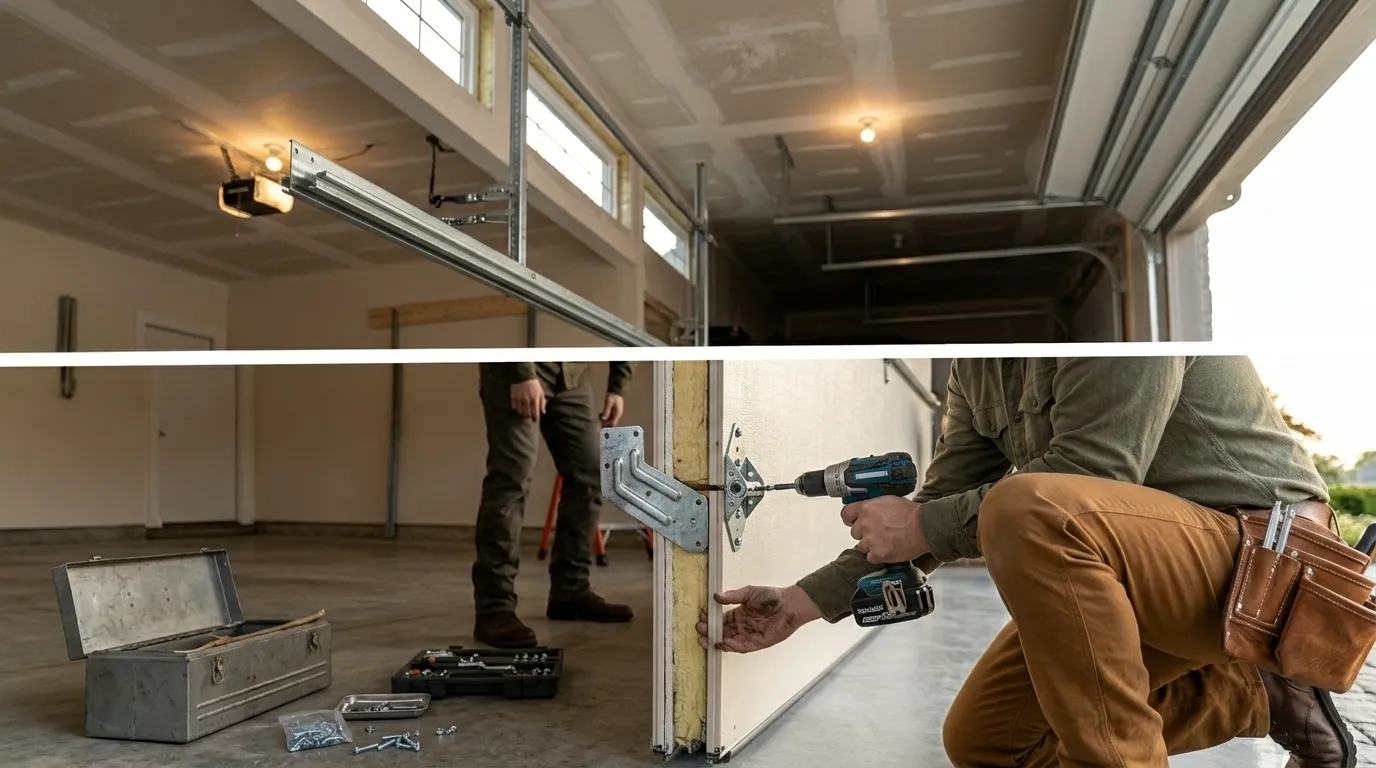
Housing across this end of the service area went up mostly between 1954 and 2002, with the median build year landing at 1983. East Kentwood sits inside that band, part of the wider stretch where 1980s and 90s construction dominates across the 26 named sections that make up the area. That era means a fairly consistent mix of garage setups: steel sectional doors, torsion spring systems mounted on a center shaft above the opening, and chain or belt-drive openers installed either at construction or as a first replacement sometime in the 90s or early 2000s.
We don't have street-level detail for East Kentwood specifically, so we won't pretend to know which subdivision has which door brand. What we can say is that a house built in the early-to-mid 80s is now past the point where its original spring, cable, and roller set can be expected to still be factory parts. Springs are rated for a number of cycles, not years, but on a typical two-times-a-day household that clock runs out somewhere in the 25-35 year range. If your house dates to that window, the hardware behind the door is very likely original or a single generation removed.
Doors from this construction period are almost always steel, either single-layer or with a thin polystyrene fill, hung on a torsion spring system rather than the older extension-spring-over-track setup you'd find in pre-1960s stock. That's a mixed blessing. Torsion springs are safer to service than old extension springs but they still store enough force to hurt someone badly if the winding cones aren't handled right.
The cold-severe climate rating for this region matters here. Steel panels expand and contract through a wide seasonal swing, and the weatherstripping and bottom seal on a door installed in the 80s or 90s has usually hardened or cracked by now, letting in more cold air than the homeowner realizes. Openers from that generation are also reaching end-of-life for their circuit boards and drive mechanisms, even if the motor itself still runs. We work on the springs, cables, rollers, tracks, openers, and panel sections that this housing stock actually has - we're not going to sell you smart-home features your door and opener weren't built to support without an upgrade first.
We come out, look at the door and opener as they're actually installed, and tell you what's worn versus what's failing. A worn roller or a stretched cable can usually wait a little; a spring that's already lost a coil or an opener with a stripped gear can't. One honest limitation: if a part is genuinely obsolete for a door this old, we may need to order it rather than carry it on the truck, and that can add a day or two to the job. We'd rather tell you that up front than promise a same-visit fix we can't back up.
East Kentwood sits about six miles south-southeast of the Grand Rapids center, in the same general direction and distance band as Kentwood itself, which sits roughly six miles out. Forest Hills and Cutlerville, both about eight miles out, are the next ring beyond that. Across the wider service area - 151,171 households, 75,312 of them owner-occupied houses, with a median household income of $76,463 - East Kentwood's housing falls on the newer side of the mix, built well after the pre-war stock closer to downtown but solidly within the 1980s-90s wave that defines most of the area's neighborhoods.
Housing in this part of the service area was mostly built between 1954 and 2002, with a median build year of 1983. That means most garages here are running original or first-replacement torsion springs, cables, and openers from the 1980s or 90s, which is old enough that hardware failure becomes a real possibility rather than a distant one.
For common wear parts like rollers, cables, and standard torsion springs, usually yes. For an opener component that's genuinely obsolete for a unit this old, we may need to order it, which can add a day or two. We'll tell you at the visit which category your repair falls into.
The region carries a cold-severe climate rating, and steel doors from the 1980s-90s building wave weren't always built with the seal quality we'd spec today. Weatherstripping and bottom seals from that era have often hardened or cracked, which shows up as cold air and drafts along the door edges.
Call now or request a free quote - same-day service on most repairs, upfront written pricing.