Grand Rapids, MI · Garage Door Service
Wyoming, MI homes built around 1969 still run original steel rollers on worn track. Here's what roller replacement costs and why cold winters wear them out fast.
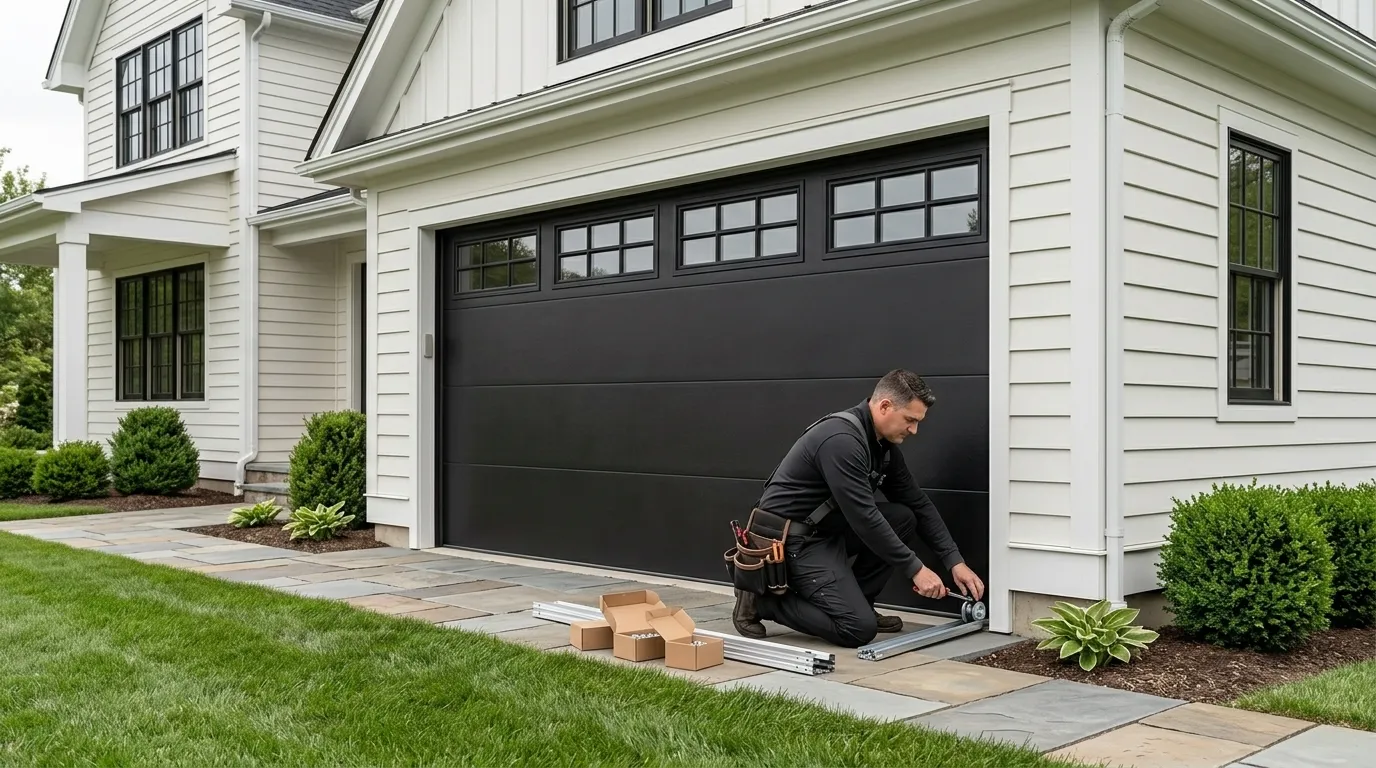
A lot of the doors on Wyoming garages are original steel roll-up doors, sized for the two-car openings that went up when this side of the county was mostly built out - homes here have a median construction year of 1969, older than the 1983 median across the wider Grand Rapids service area. That means the rollers riding the track are often plain steel or early sealed-bearing steel, not the nylon rollers you'll find on anything installed in the last fifteen years. Steel rollers on a 55-year-old track are noisy, and by now most have flat spots or a bearing that's seized.\n\nSwapping rollers on a door that size is doable if you're comfortable working around a loaded torsion spring and you can get the door up on a jack while you pull the roller brackets one at a time. The part isn't expensive and the tools are basic - nut driver, pliers, a step ladder. Where people get hurt is the bottom bracket, which sits under cable tension even with the door down. If your track is bent or the door binds partway up, that's not a roller problem anymore, and pulling rollers on a door that's already racked in the track can make the binding worse. We're honest that this is one of the more DIY-friendly garage door jobs - we'd rather tell you that than sell you a truck roll you didn't need.
We don't quote roller replacement over the phone without seeing the door, because the number depends on whether you need 2 rollers or all 10, and whether the track itself needs straightening or replacing along with them. What we can tell you is that the parts side of this job is cheap compared to a spring or opener repair - rollers are one of the lower-cost line items we carry on the truck.\n\nWhat pushes the price up in Wyoming specifically is the age of the hardware. On a door from the late 1960s or 1970s, the roller stems are often a slightly different gauge than what's stocked today, and the track brackets can be rusted enough that a roller swap turns into a bracket swap too. We travel to Wyoming from Grand Rapids for every call, so there's no separate branch fee - just the job in front of us.
Wyoming sits in a cold-climate zone with the kind of winters that put real stress on garage door hardware - repeated freeze-thaw cycles work moisture into the roller bearing and track seams every year. On a door built when this area was going up in the late 1960s, that's more than fifty winters of the same cycle on the same steel. Grease dries out, rollers stop turning freely, and the door starts riding on a corner instead of rolling smooth in the track.\n\nSalt and road grit tracked in from driveways doesn't help either - it works into the track groove and grinds the roller stem down faster than dry wear alone would. We see this most on doors that haven't had the track cleaned or lubricated in years, which on a house this age is most of them. The fix at that point isn't a squirt of oil, it's new rollers, because the bearing surface itself is worn, not just dirty.
The complication we run into most in Wyoming is track condition rather than the rollers themselves. A door built around 1969 often has track brackets fastened directly to framing that's shifted slightly over five-plus decades, so the track isn't square anymore. New rollers dropped into a track that's slightly twisted will bind again within a season, so we check the track alignment before we call the job a roller job.\n\nThe other thing worth knowing: this area's household income runs a bit under the wider service area's median - $72,163 here against $76,463 across the region - and we mention that because it's part of why we try to fix the actual problem (rollers) instead of upselling a full door replacement when the door itself is still sound. A worn roller doesn't mean the door is done. It means the door is 55 years old and has been rolling on the same steel the whole time.
On an original door from this era, if one roller has failed the others are usually close behind, since they've all done the same fifty-plus winters of work. Most jobs we do here end up replacing the full set rather than just the one that seized, because doing it piecemeal means we're back in six months for the next one.
On a house built around 1969 in Wyoming, they're almost always steel - plain or sealed-bearing. Nylon rollers became standard much later. If your door has been replaced since the house was built, you may already have nylon, but the original hardware on a house this age is steel every time.
Yes, and this is common on older Wyoming doors. A roller with a flat spot or a seized bearing drags instead of rolling, which wears a groove into the track over time. If that's happened, replacing just the roller won't fix the noise - the track needs attention too.
No. We're based in Grand Rapids and drive out to Wyoming, about 6 miles, for every call. There's no local branch here, just the truck and the tools we bring with us.
Call now or request a free quote - same-day service on most repairs, upfront written pricing.