Grand Rapids, MI · Garage Door Service
Off-track garage door repair for Wyoming, MI homes built around 1969, where original steel track and rollers meet Michigan winters. Serving Wyoming from Grand Rapids, 6 miles out.
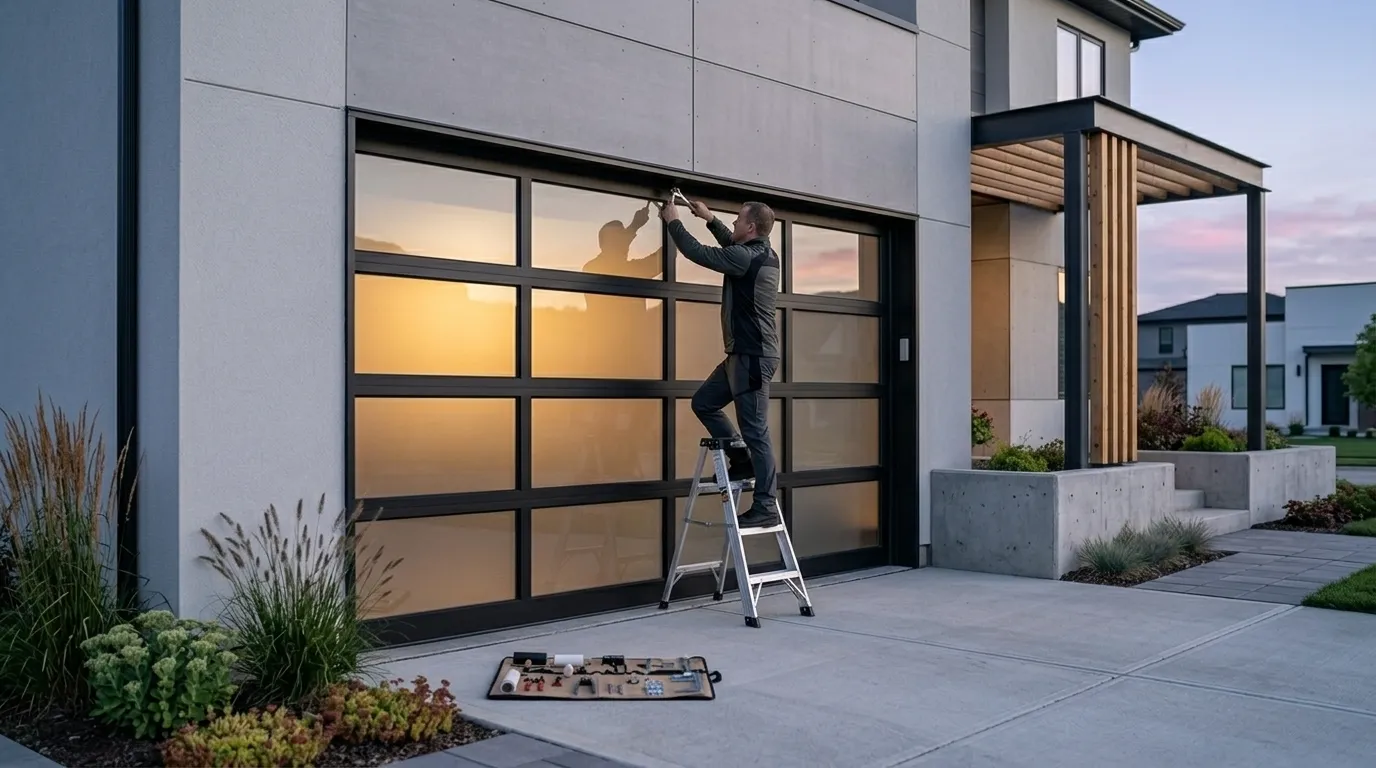
A door that's jumped its track isn't something to muscle back into place. When one side of the door hangs lower than the other, or the rollers have popped clean out of the horizontal rail, the door is being held up by whatever's left of the cable and spring tension - and that tension doesn't care whether your hand is in the way. If the door still opens and closes but scrapes or binds at one spot, that's usually a bent track section, and you can sometimes true it up with a rubber mallet and a level if you know what you're looking at. But if a panel has actually left the track, or the door won't budge at all, stop. Homes in Wyoming built around the median year of 1969 often still run original galvanized steel track that's thinned with age, and forcing a door back onto track that's already flexing can snap it, or drop the whole assembly. The honest answer: check for an obvious cause you can see without touching cables - a bent bottom bracket, a roller that's split - but leave torsion spring work and full track realignment to someone who does it daily. We don't charge to walk you through what you're looking at over the phone before you decide.
We don't post a flat number here because off-track jobs vary more than most garage door repairs - a door that slipped one roller on one side is a different job than a door that's dropped off both tracks and bent the bottom panel doing it. What we can tell you is what drives the cost: whether the track itself needs replacing versus just realigning, whether rollers or a bent bracket came with it, and whether the spring held tension through the event or let go too. In a service area where median household income runs $76,463 but Wyoming itself sits closer to $72,163, we quote the job in front of us rather than push a package. If you want a number before we're on site, tell us what you can see - which side, how far off, whether it still moves - and we'll narrow it down before the truck leaves Grand Rapids.
Wyoming's housing stock centers on 1969, which puts a lot of these garages on the older end of the region's mostly-1980s-to-90s inventory. That matters for one specific reason: track hardware from that era was hung with fewer, lighter brackets than what's used now, and forty-plus years of seasonal expansion and contraction loosens the lag screws holding the track to the framing. Add Michigan's severe cold-climate swings - a garage floor that freezes solid, then thaws, then freezes again - and the wood behind those brackets shrinks just enough that a hard stop, a slammed remote-close, or a car bumper tap is enough to walk a roller off the rail. We see it most on doors that never had the track bracket depth checked after the original install. It's not a manufacturing defect. It's forty-plus years of a fastener doing a job it was sized for in 1969, in a house that's settled since.
The complication we run into most in Wyoming isn't the track itself - it's what's attached to it. On a house from the late 1960s, the track brackets are often lagged into original framing that's shifted enough over the decades that a straight realignment won't hold; we end up re-anchoring into solid wood a few inches over from where the factory put it. If the door came off track because a spring let go rather than the other way around, that's two separate repairs bundled into one visit, and it changes both the price and the time on site. And on a small number of these houses the track was never upgraded when the opener was added later, so we're matching new rail to an opener bracket that was never meant to pair with it. None of this is unusual, but it's why we look at the whole assembly before quoting, not just the section that's visibly off the rail.
A lot of it traces back to build year. Wyoming's housing centers on 1969, meaning original track brackets lagged into framing that's had decades to shrink and shift. Combine that with Michigan's cold-climate freeze-thaw cycle and it takes less force than you'd think - a hard stop or a bumper tap - to walk a roller off worn rail.
Not always, but it's common enough that we check both. Sometimes a spring lets go and pulls the door off track on the way down. Other times the track itself is the failure and the spring is fine. We inspect the whole assembly before quoting so you're not paying to find out twice.
No - we run this from Grand Rapids, about 6 miles out, and cover Wyoming as part of our service area. There's no separate branch or depot here, just a truck that comes to you.
If a roller has fully left the rail, no. The door is likely being held by cable tension alone at that point, and forcing it can drop the whole panel. A track that's just bent slightly and still guiding the door is a different, lower-risk situation - but if you're unsure which one you have, call before you touch it.
Call now or request a free quote - same-day service on most repairs, upfront written pricing.