Grand Rapids, MI · Garage Door Service
Kentwood's garage doors mostly date to the early 1980s buildout. Here's what wears out first on that stock, what a tune-up covers, and what it costs to keep ahead of it.
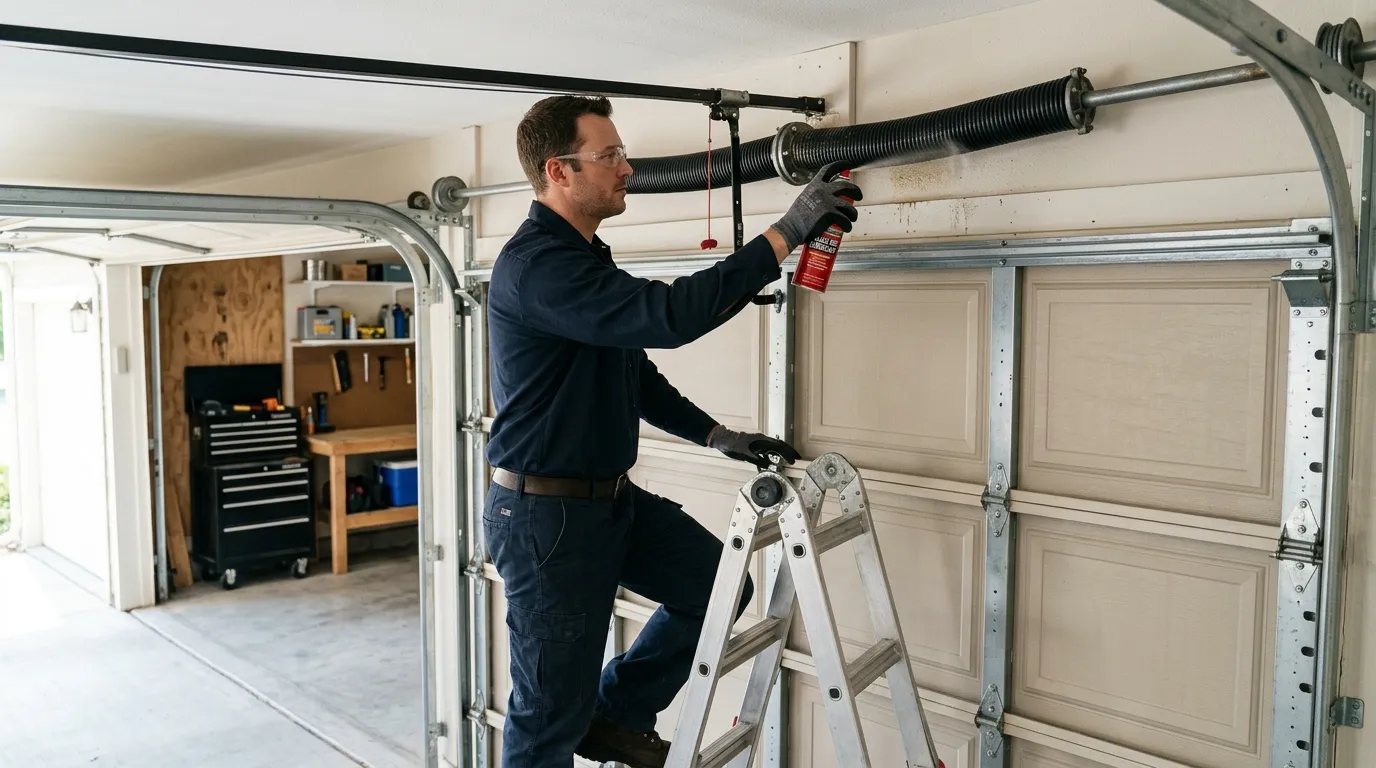
We don't quote a flat number here because the job changes with the door. A single-car door with a working opener costs less to maintain than a double with an aging chain drive, and Kentwood has plenty of both from its building boom. What we can tell you is the shape of the decision: with a median household income of $73,647 across the area, most owners here are weighing a $150-ish tune-up against a spring or opener replacement that costs several times that. A maintenance visit is cheap insurance against the bigger bill.
We travel to Kentwood from Grand Rapids, about 6 miles out, so there's no separate dispatch fee baked in for distance - it's a short run, not a special trip. What does change the price on-site is what we find: a torsion spring that's lost tension, rollers that have gone from nylon to metal-on-metal, or a photo-eye sensor that's drifted out of alignment. We'll tell you what's worth doing now and what can wait, rather than pad the ticket.
Some of it, yes. Lubricating hinges and rollers with a proper garage door lubricant, checking that the auto-reverse safety feature still trips when it hits an object, and vacuuming out the track are all reasonable weekend jobs. Tightening loose hardware on the track brackets is fine too, as long as you're not touching anything under spring tension.
What we don't recommend doing yourself is anything involving the torsion spring itself - the one wound tight above the door that does the actual lifting. On a lot of Kentwood's 1980s-era doors, those springs are original or close to it, and a spring that's held tension for four decades doesn't fail gently. We also don't recommend chasing an opener that's cycling erratically; on units this old, that's often a logic board or a worn gear, not a setting you can fix by unplugging it and plugging it back in. If you're not sure which category you're in, that's a call, not a guess.
Most maintenance visits run under an hour once we're inside the garage: inspect the springs, check cable wear, test balance by disconnecting the opener and lifting the door by hand, lube the moving parts, and confirm the opener's safety reverse and photo eyes are working. On a house from the early 1980s buildout - which describes a lot of Kentwood - we're also checking whether the track hardware has been upgraded since the door went in, because a lot of it hasn't.
Winter changes the math. This area sits in a cold climate band with real seasonal severity, and cold makes steel brittle and grease thick. A spring that's marginal in July can snap in January because the metal has less give and the lift is harder on a stiff mechanism. That's the honest limitation here: we can extend the life of aging hardware, but we can't make a 40-year-old spring behave like a new one. At some point the tune-up becomes a stopgap, and we'll say so instead of billing you for another one.
We run this out of Grand Rapids and cover Kentwood as part of the regular route - see Kentwood coverage for what else we handle in the area. Booking a maintenance visit doesn't require anything special on your end: garage clear enough to work in, and knowing roughly how old the door and opener are if you know it. If you don't, that's fine, we can tell fairly quickly once we're looking at the hardware.
For the full rundown of maintenance service across the metro, including what's different in newer subdivisions versus older stock, the Grand Rapids maintenance page covers that. This page is specifically about what we see in Kentwood houses, most of which were built between the late 1970s and the 1990s, with a median build year of 1983.
We keep common torsion springs, standard rollers (nylon and steel), cables, and universal safety sensor kits on the truck, because those are the parts that fail most often on doors from Kentwood's building era. What we don't always have on hand is a legacy part for an opener model from the early 1980s that the manufacturer stopped supporting years ago - those sometimes need a short lead time to source, and we'll tell you that up front rather than promise same-visit installation we can't deliver.
Across the wider service area there are roughly 75,312 owner-occupied houses, and the housing stock generally runs from 1954 to 2002, which means we stock for a wide spread of door and opener generations, not just one decade. Kentwood's own stock clusters tighter, mostly 1980s and 90s, which is part of why torsion springs and rollers move fast off the truck for jobs out this way.
Once a year is the standard interval for most doors, but given the cold climate band this area sits in, we'd lean toward checking balance and spring tension before winter specifically. Cold makes hardware more likely to fail under load, and a fall check catches problems before the first hard freeze finds them for you.
Depends on what we find. If the panels are sound and it's mainly springs, cables, or rollers that are worn, maintenance and part swaps make sense. If the opener is failing and parts are hard to source, or the door itself has rusted or warped, replacement often costs less over time than repeated visits. We'll give you a straight read on-site.
No - we run out of Grand Rapids and cover Kentwood as part of our regular service area, about 6 miles out. There's no separate branch here, just a short drive.
Torsion springs losing tension and rollers wearing out are the two most common, which tracks with a lot of the local housing dating to the early 1980s. Original hardware from that era is well past the point where wear shows up as noise, drag, or an opener straining to lift the door.
Call now or request a free quote - same-day service on most repairs, upfront written pricing.