Grand Rapids, MI · Garage Door Service
Jenison's 1973-era doors run narrower track than the 1980s stock common across Grand Rapids. Here's why that hardware walks off-rail and what we carry to fix it.
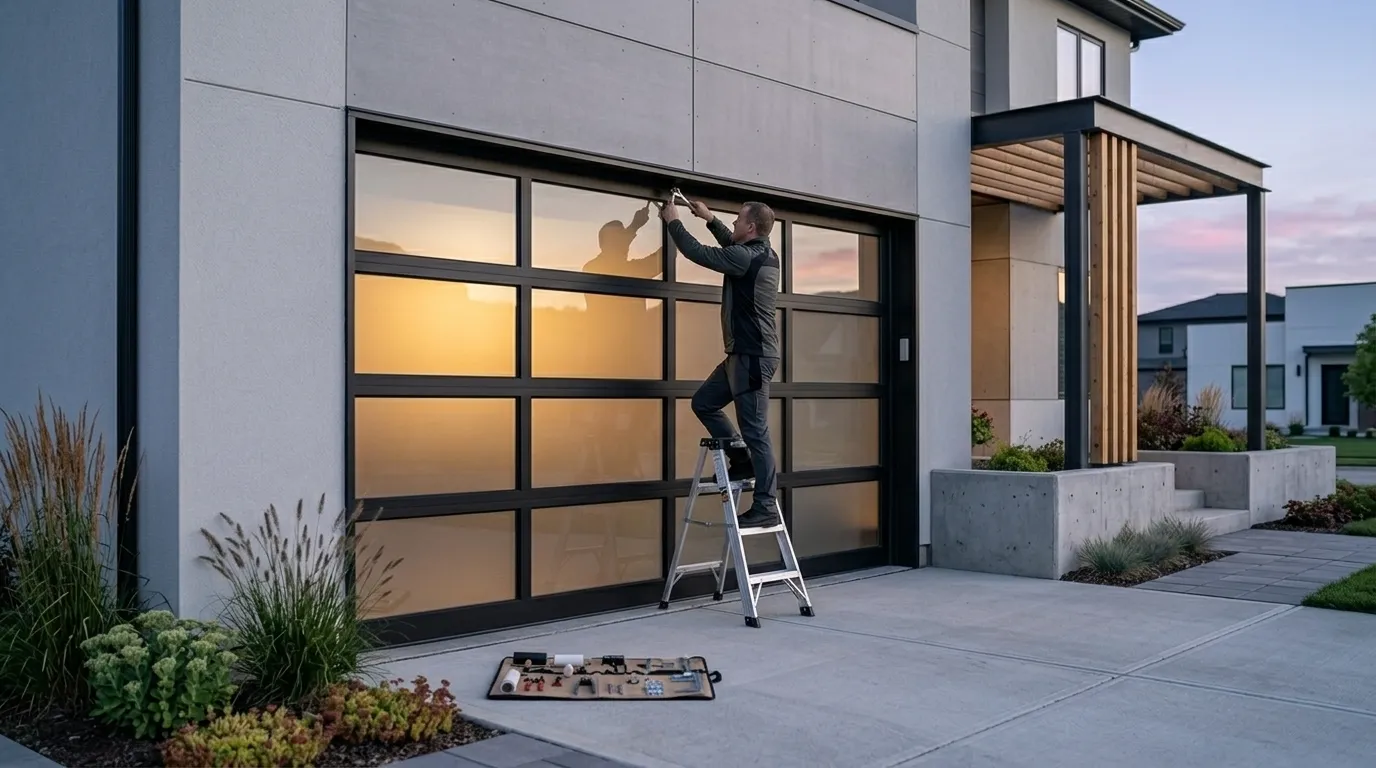
Jenison's housing stock centers on 1973, a decade older than the 1983 median that covers the wider service area we work across. That gap matters more than it sounds like it should. A door built in the early 1970s is usually a single-layer steel sectional on a narrower track profile than what builders started hanging once wider two-car openings became the norm in the 1980s and 90s runs that make up most of the other 25 areas we cover. The panels are shorter, the roller stems are thinner, and the track brackets were often fastened with fewer lags than later codes called for.
None of that is a problem on its own. It becomes one when a roller works loose or a bracket flexes, because the tolerances on that older hardware are tighter to begin with. A door on a wide 1990s track can wander a little and still ride the rail. A door on a narrow 1973 track doesn't have that margin - it comes off cleaner, and it comes off faster. We're driving 10 miles out from Grand Rapids for this kind of call more than we are for the closer 6-mile ring, so when we go, we go prepared for the older hardware, not the newer stuff.
The door usually gives a warning before it fully derails: a scrape or grind on one side as it travels, a visible tilt where one bottom corner sits lower than the other, or a roller that's clearly outside the track channel when you look up at it from underneath. Sometimes it stops mid-cycle and won't go further in either direction because the opener has hit resistance it isn't built to push through.
On the narrower 1970s track common in Jenison, you're more likely to see the whole door bind at an angle rather than just one panel kick sideways - because the track has less room to absorb the roller drifting before something jams. If the opener keeps trying to force it, that's the point where a cable or spring can go too, and what started as an off-track roller turns into a bigger repair. Shutting the opener off and pulling the release cord as soon as you notice the tilt is the right move, not running the door a few more times to see if it clears itself.
Cold is the main driver. This area sits in a severe cold climate band, and freeze-thaw cycles work on garage door hardware the same way they work on driveways - expansion and contraction, over and over, loosening what was tight. On a door that's original to a 1973 build, that's fifty winters of it. Track brackets that were snug when installed can work a few millimeters loose, and a few millimeters is enough for a roller to walk off the rail on a narrow track.
The other factor is household income and what it does to maintenance history. Jenison runs a median household income of $86,063, above the $76,463 median across the rest of the service area, and higher-income households more often replace worn hardware before it fails outright rather than living with a door that's slowly drifting off-square. That's good news structurally, but it also means when we do get an off-track call here, it's frequently a door that's been neglected relative to its neighbors rather than a random one-off - something changed, a spring lost tension, a bracket sheared, and the door came off rail because of that, not because of routine wear alone.
The rollers, brackets, and track sections that fit a narrow 1970s door aren't interchangeable with the wider-gauge hardware that fits the 1980s and 90s doors making up most of the rest of the service area. We carry both profiles on the truck because we don't know which one we're walking into until we're standing in front of the door, and a Jenison call is more likely to need the older, narrower parts than a call six miles closer to the city core.
What we don't carry, and won't pretend to: exact factory-match panels for doors this old. If a section is dented or rusted through on original 1973 hardware, we're not sourcing the identical panel - nobody stocks it anymore. In that case we talk through whether it's worth patching the track and rehanging the door as-is, or whether the door has reached the point where replacement makes more sense than another repair on hardware pushing fifty years old. That's a real conversation, not a sales pitch, and it comes up more in this part of the service area than most.
A lot of Jenison houses date to around 1973, a decade earlier than the median across the rest of the area, and doors from that era typically ride narrower track than the wider profile common in 1980s and 90s builds. Narrower track has less tolerance for a loose bracket or worn roller, so it comes off rail sooner and more visibly than newer hardware would under the same conditions.
Not always. Factory-exact panels for doors from the early 1970s aren't something suppliers stock anymore, so an exact match usually isn't possible. We can often repair the track and rehang the existing door if the panel damage is minor. If a section is badly dented or rusted, replacement of that section or the door is the more honest answer.
We run out of Grand Rapids, about 10 miles from Jenison, so it's a planned trip rather than a walk-around-the-corner job. We don't post a fixed response time here - call and we'll tell you where the truck is that day and when we can realistically get to you.
Call now or request a free quote - same-day service on most repairs, upfront written pricing.