Grand Rapids, MI · Garage Door Service
Jenison homes run about a decade older than the Grand Rapids median, which means narrower openings and different track clearances. Here's what that means for your install.
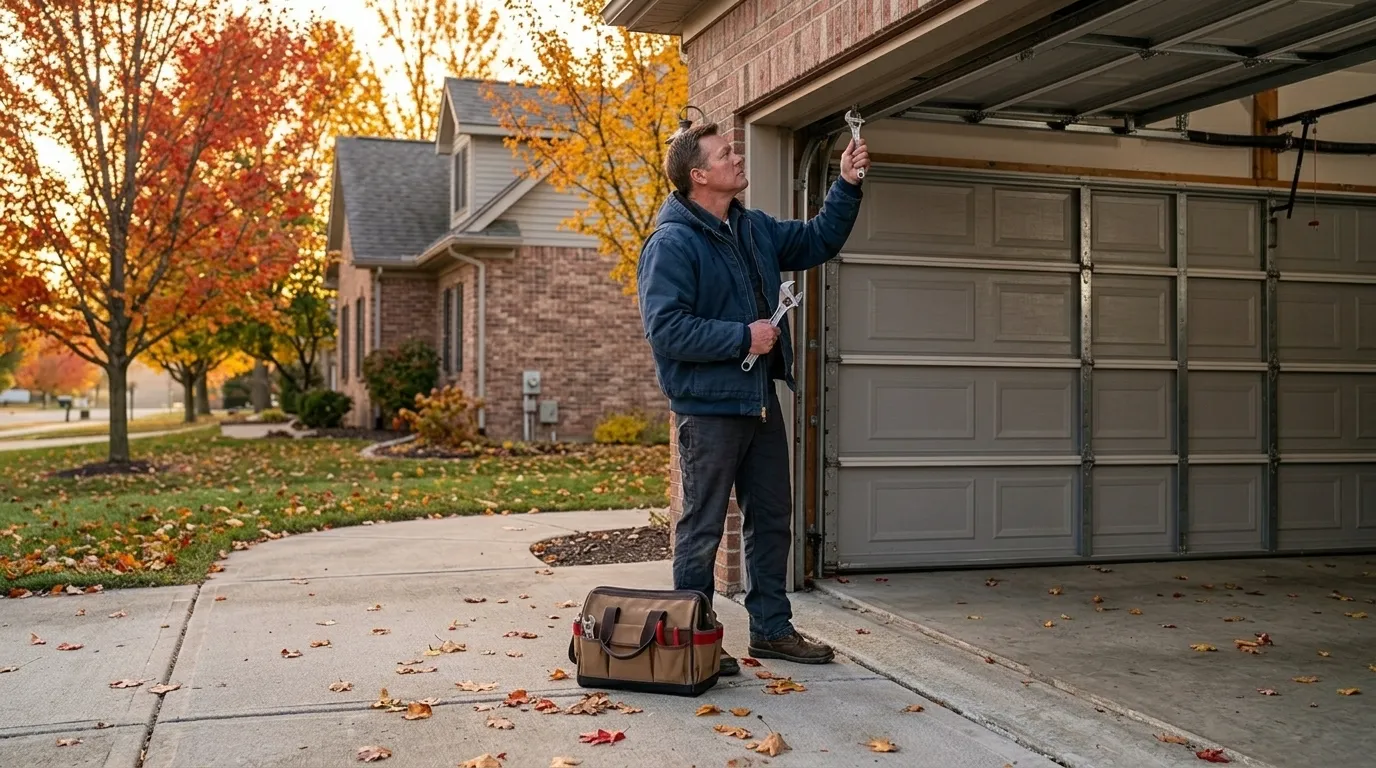
Grand Rapids as a whole has garage stock spanning 1954 to 2002, with the citywide median landing around 1983. Jenison sits older than that median - most houses here went up closer to 1973, a full decade earlier. That gap matters more than it sounds. Builders in the early 1970s were still framing a lot of single-car and narrow two-car bays, with rough openings that don't match what a big-box door comes in today. We've measured openings out this way that run two or three inches narrower than the standard 16-foot double most retailers stock as their default.
That means a straight swap - old door out, new door in, same size - sometimes isn't an option. We either special-order a size that fits the original framing or, if the homeowner wants the wider modern door, we're also resetting jamb boards and sometimes the header. Neither is a huge job, but it's a different quote than the one you'd get for a house built in the 1990s, and it's worth knowing before you start pricing doors online based on a standard size that may not fit your bay at all.
The complaint we hear most from this stretch of Jenison isn't a broken spring - it's a door that closes crooked, or a new-looking door that never quite seals flush against a floor that's settled since the 1970s. On a house this age, the slab has usually shifted a little over fifty years, so a door cut to the original spec doesn't sit level against it anymore. Owners notice daylight under one corner, or a bottom seal that wears through on one side years before the other.
Another version of the same symptom: a double-car opening that was clearly cut for two single doors originally, now carrying one door that's been forced to fit. You'll see this as a track that's been re-bent or shimmed at some point by whoever installed it last - a patch job that worked for a while but is why the door binds or drifts off-square now. We don't fault the earlier install; it's a common workaround for an opening that predates the door hardware available at the time.
It comes back to the same thing: an opening framed for 1970s-era hardware getting a modern door that assumes 1990s or 2000s framing tolerances. Grand Rapids overall skews newer - the 1954-2002 range covers a lot of housing built well after Jenison's boom - so a lot of standard installation guides and stock door sizes are tuned to that newer average, not to what's actually in the ground out here.
Add the climate. This region sits in a cold-severe band, so slab heave and frost movement over fifty winters have done real work on foundations built before anyone poured with today's frost-depth standards in mind. A door and track set level in 1973 won't necessarily still be level now, and that's before you factor in whatever settling or patch repairs happened along the way. When we quote an install here, we're measuring the actual opening, not assuming it matches a size off a shelf.
For openings from this era we carry double doors in a few width steps below the current 16-foot standard, along with the jamb hardware to reset a rough opening that's shrunk or racked slightly out of square. We stock torsion springs sized for both older single-piece doors and the sectional doors that replaced them, since we still run into both on the same block.
One honest limit: if a rough opening has settled badly enough that the header itself needs replacing, that's carpentry work, not a garage door job, and we'll say so rather than force a door into a frame that isn't square. We'd rather send you to the right contractor first and come back to install once the opening's sound. That's a smaller share of jobs out here than you'd think, but it happens, and pretending otherwise doesn't help either of us.
Not always. A lot of Jenison openings date to around 1973, which is a decade before the median build year across the wider Grand Rapids area, and openings from that era often run narrower. We measure before quoting rather than assuming a stock size will fit.
Usually it's the slab, not the door. Fifty years of freeze-thaw in a cold-severe climate band moves a garage floor unevenly over time. A door cut level to today's floor can still show daylight on one corner if the slab has shifted since the house was built.
No - we're based in Grand Rapids and drive out to Jenison for installs, about 10 miles each way. There's no local branch or depot here, just crews traveling from the main shop.
If the rough opening itself is racked or the header's compromised, that's carpentry work we don't do. We'll tell you straight if a job needs a contractor to square the frame before a new door can be installed properly.
Call now or request a free quote - same-day service on most repairs, upfront written pricing.