Grand Rapids, MI · Garage Door Service
Grandville's 6,445 households sit mostly on 1970s-era doors, older than the Grand Rapids area median. Here's what that means for tune-ups and what we carry on the truck.
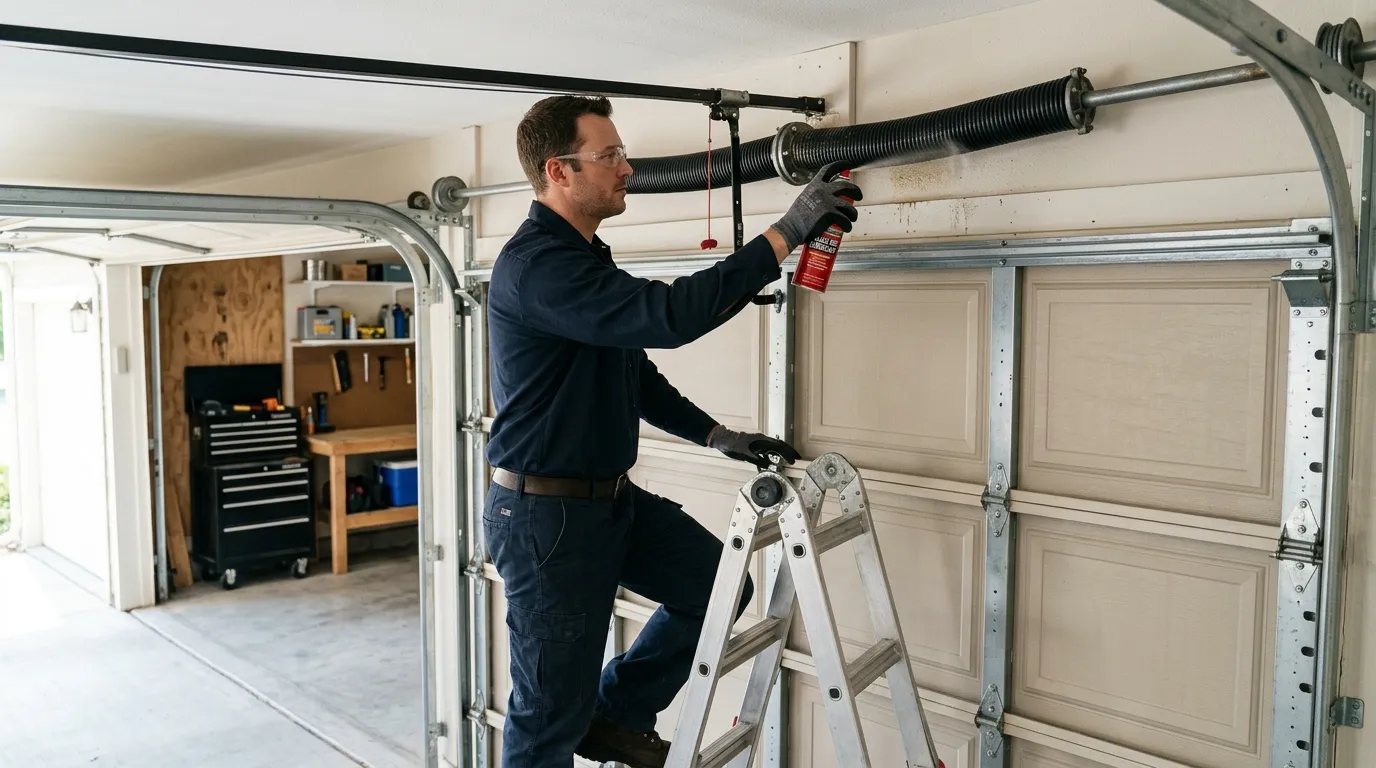
Grandville is a small town by the numbers - about 6,445 households, six miles southwest of Grand Rapids. That size matters for maintenance work: it's not a place with thousands of new builds cycling through, it's a fixed stock of houses that mostly went up around 1977, a few years ahead of the wider Grand Rapids service area's median of 1983. A door installed in the late '70s has had close to fifty winters on the same springs, rollers, and hinges unless someone's already swapped them out.
That age matters more here than the calendar might suggest. The area sits in a cold-climate band with severe winter conditions, and a door built to 1977 standards wasn't engineered with today's insulation or sealing in mind. Cold contracts steel and hardens grease. On a 1970s door that's never had the springs re-tensioned or the track re-aligned, that contraction is what turns a slow drag into a snapped cable or a door that won't lift at all. We see it most on doors that have had zero maintenance history - not because owners are careless, but because a working door doesn't ask for attention until it stops working.
A standard tune-up on a single door - lubrication, hardware check, spring tension, track alignment, opener safety test - runs about the same length of time whether the door is five years old or fifty. What changes with a house built around 1977 is what we find once we're in there. Older tracks and drums often need adjustment beyond the basic service, and that adds time to the visit rather than shortening it.
We travel from Grand Rapids for every Grandville call, so we don't carry a separate local response time to quote you - the trip is six miles, not around the corner. Book the visit and we'll tell you honestly on site whether it's a straightforward tune-up or something that needs a follow-up call for parts.
The complication with a 1977 door isn't usually the door panel itself - steel and wood both hold up fine over decades if they're not damaged. It's the hardware behind it. Torsion springs from that era were sized for the door weight and insulation standards of the time, and if a homeowner added weather-stripping or a heavier insulated section since, the spring is now under-sized for the actual door. That mismatch doesn't show up as a broken part - it shows up as an opener straining, or a door that slams the last six inches instead of settling.
We also see openers that have been replaced more recently than the door and track. That's common in a housing stock this age: the opener dies first, gets swapped, and nobody checks whether the new opener's force settings actually suit thirty- and forty-year-old track and rollers. A maintenance visit is where we catch that mismatch before it becomes a slammed door or a sensor that never quite works right.
The symptom we hear most from Grandville calls is a door that's noticeably louder or slower than it used to be - not broken, just off. On houses from the late 1970s, that's almost always rollers and hinges that have gone dry, combined with a spring that's lost some of its original tension after decades of cycles. Cold makes it worse: a door that's merely noisy in summer can start hesitating or reversing on its own once temperatures drop, because the cold-stiffened cable and hardened lubricant add resistance the opener's motor wasn't fighting before.
If your door has started closing partway and reversing, or you're hearing a grinding sound from the track rather than a smooth roll, that's worth a maintenance call before it becomes a spring replacement instead of a spring adjustment.
For doors from this era we carry standard-size torsion springs, steel rollers, and general hardware that fits the sizing common on houses built through the 1980s and into the 1990s, which covers most of the stock across the wider Grand Rapids service area. What we don't stock on the truck is anything genuinely obsolete - a one-off panel design or a discontinued opener model from the era. If a part isn't something we carry, we'll say so on the visit rather than guessing, and we'll tell you what the lead time looks like before we order it.
That's the honest limitation on maintenance work generally: a tune-up fixes wear and tear, it doesn't fix a part that's already failed structurally. If a spring is cracked or a track is bent, that's a repair call, not a maintenance one, and we'll tell you which one you actually need.
Some of this is fine to do yourself. Wiping down and lubricating rollers and hinges with the right garage door lubricant, checking that the door balances when disconnected from the opener, and clearing debris from the track are all reasonable homeowner jobs on a schedule of a few times a year.
What isn't a DIY job is anything involving the torsion spring itself. A spring under tension on a door this old can release with enough force to cause serious injury, and on a house from the 1970s that spring has likely never been replaced or professionally checked. If your door feels heavy to lift by hand with the opener disconnected, that's a sign the spring has lost tension - call for that one rather than adjusting it yourself.
Most Grandville houses were built around 1977, a bit earlier than the wider Grand Rapids area's median of 1983. That means original torsion springs, rollers, and tracks are often close to fifty years old unless a previous owner replaced them, which is the main thing a maintenance visit checks for.
No. We're based in Grand Rapids and travel to Grandville for every job, about six miles each way. There's no separate local depot or crew, just the same team making the short trip out.
The area sits in a severe cold-climate band, and cold stiffens cable and hardens old grease on hinges and rollers. On a door with original 1970s-era hardware, that added resistance is often what turns a minor drag into a door that hesitates, reverses, or won't lift fully.
Usually yes, if the door and track are structurally sound. A tune-up catches spring tension loss, dry hardware, and misalignment before they cause a cable snap or a stuck door. It's not worth it if a part has already failed - that's a repair, not maintenance.
Call now or request a free quote - same-day service on most repairs, upfront written pricing.