Grand Rapids, MI · Garage Door Service
Grandville homes date to 1977 on average, so original torsion springs and openers are still common. Repairs come from our Grand Rapids crew, 6 miles away.
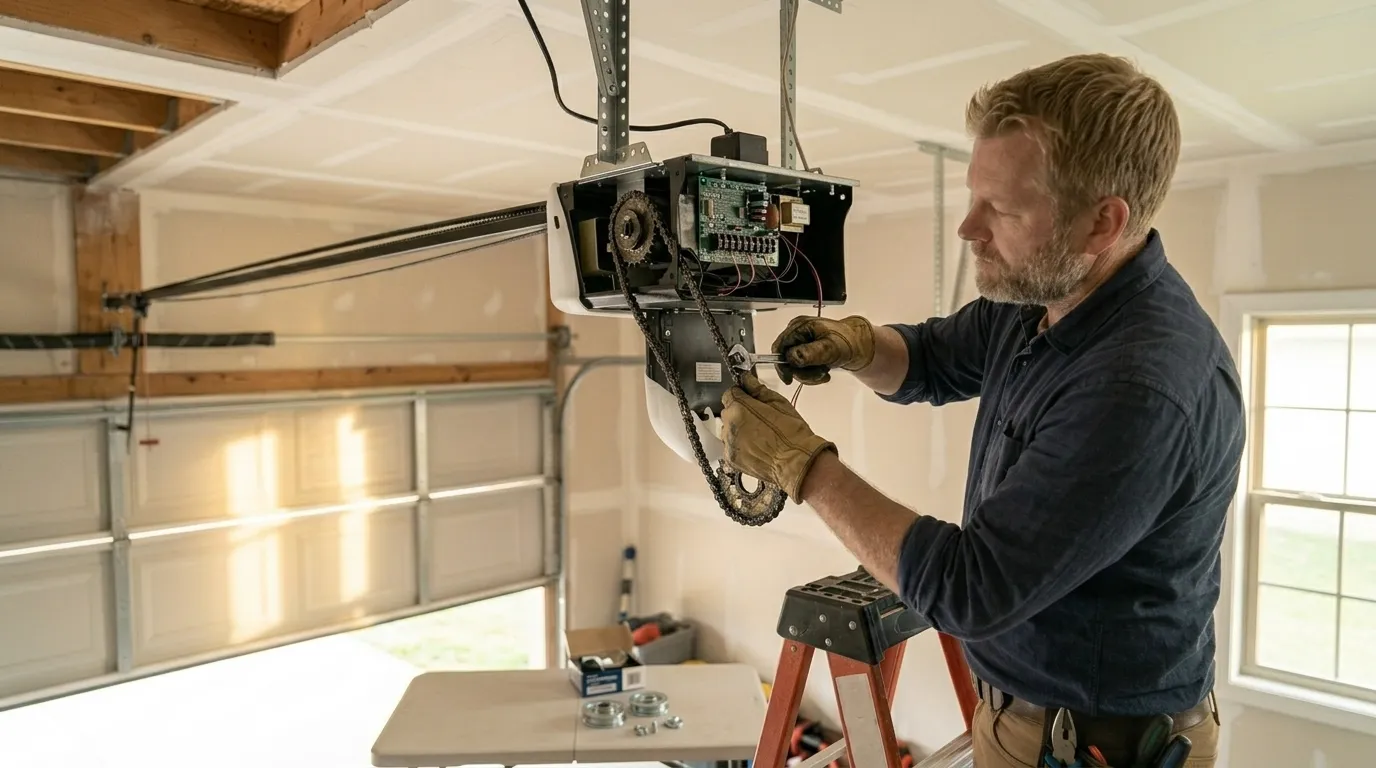
Grandville's median home went up in 1977, a good six years earlier than the median build year across the wider Grand Rapids service area, which sits at 1983. That extra stretch matters: doors and openers on those houses have had six more winters to work their springs, six more years for factory lubricant to gum up, six more seasons of freeze-thaw on the track bolts. A lot of the torsion springs, cables, and rollers on Grandville garage doors are still the ones the builder put in - nobody's called about them because nothing's failed yet, or because the slow failure got written off as 'the door's just old' instead of a fixable part. Add in this area's severe cold band, which puts real stress on steel through the winter, and you get a specific failure pattern here: springs that lose tension gradually rather than snapping clean, galvanized cable that frays where it rubs the drum, and hinge points on 1970s-era steel doors that were never rated for the panel weight of a modern insulated retrofit. With about 6,445 households in Grandville, most sitting on garages from that same building wave, this pattern shows up street after street, not as a one-off.
There's no single answer, because the job depends on what's actually failed, not on the calendar. A torsion spring swap on a standard double door is usually a single visit - diagnose, pull the old spring, wind the new one to the right turns, test the balance. A cable or roller job runs shorter than that. Where it stretches out is parts: openers made in the late 1970s or 1980s often used chain-drive units and control boards that aren't manufactured anymore, and a same-era replacement part sometimes has to be ordered rather than pulled off the truck. If the whole opener needs replacing, that's a longer visit than a repair, since it means resetting travel limits, safety reversal, and wiring to current code - not just bolting on a new box. We won't pretend a repair on a 45-year-old opener takes the same time as one on a five-year-old unit. It usually doesn't, and we'll say so on the phone before we're at your door, not after.
The complication in Grandville isn't usually the door itself, it's what's around it. Homes from the 1977 era often have garages built to the code and door-opening standards of that decade, which means openings can run narrower or shorter than what's commonly stocked today, and headroom for a modern torsion setup can be tighter than a newer build allows for. Cold makes this worse: this area sits in a climate band rated severe for winter stress, and metal contracts enough in a hard freeze that a spring wound correctly in October can bind or bounce by January. On an original 1970s door, that's compounded by decades of the same steel hinges and rollers absorbing that cycle without ever being replaced. There's also the matter of safety hardware - photoelectric sensors weren't standard when a lot of these doors went in, so a repair sometimes turns into a code-compliance conversation, not just a parts swap.
On original 1970s hardware, failure rarely looks like the door slamming shut. More often it's a door that reverses partway up for no clear reason, or one that closes slower on one side than the other - both signs of a torsion spring that's lost tension unevenly rather than snapped clean. You might hear a grinding pop from the drum area instead of a clean bang when something finally gives. Openers from that era tend to fail by running the motor without moving the door at all, which usually means the chain or gear has stripped, not that the whole unit is dead. If your door in Grandville is doing any of this, it's worth a look before it becomes a fully stuck door - which, with a 1970s panel that's heavier than it looks, isn't something to force by hand.
We carry standard torsion springs, extension springs, galvanized cable, steel and nylon rollers, hinges, and openers across common residential sizes. For original 1970s and 80s equipment, this is where the honest limit shows up: some legacy opener control boards and specific spring wire gauges from those decades aren't stocked on the truck and take a day or two to source. When that happens we'll tell you instead of forcing in a part that doesn't match your door's balance or opening size. Where the original opener has failed outright and matching parts are hard to source, replacing the whole unit is usually the more honest answer than chasing discontinued components for a machine that's near the end of its working life anyway.
Rollers, weatherstripping, and hinge bolts are reasonable DIY work if you're comfortable on a ladder and know which bolts hold weight. A torsion spring is not something to touch yourself - it's wound under enough tension to break a bone, and on a door built in 1977 you're also dealing with decades of corrosion or seized set screws that a new door won't have. Openers are a middle case: swapping a remote battery or resetting a limit switch is fine to try, but rewiring safety reversal or replacing a control board on an original 1970s or 80s unit is where a mistake stops being cosmetic and starts being a door that doesn't stop on a hand or a pet. If your garage door in Grandville won't move, or moves unevenly on one side, that's worth a call rather than a Saturday spent guessing.
On a lot of Grandville doors built around 1977, the torsion spring is still the original one. Springs lose tension slowly over decades, especially with this area's severe winter cold working on the steel every year, so the door gets harder to lift by hand and the opener strains more than it should. That's a spring tension issue, not a motor problem, and it's fixable without replacing the whole door.
No. We work out of Grand Rapids, about six miles away, and travel out to Grandville for the job. There's no local branch or drop-in counter here - every visit is a scheduled call to your address.
Usually, but not always off the truck. Standard springs, cables, and rollers we stock. Some legacy opener control boards from that era have to be sourced, which can take a day or two. If a part's discontinued, we'll say so and talk through whether repair or replacement makes more sense instead of guessing.
Depends on what's actually wrong. A spring, cable, or roller failure on an otherwise sound 1970s door is worth fixing. If the opener's failed and parts aren't available, or the panels themselves are rusted through or racked, replacement usually costs less over time than chasing parts for a door that's near the end of its run.
Call now or request a free quote - same-day service on most repairs, upfront written pricing.